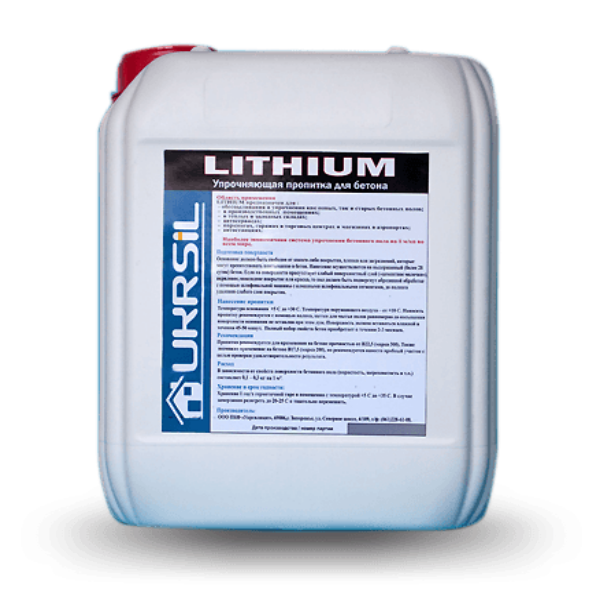
Types of Water-Based Liquid Hardeners for Concrete and Topping Floors
Concrete floors in industrial, commercial, and high-traffic environments demand superior surface performance to ensure longevity, safety, and cost-effectiveness.
One essential technology that significantly enhances concrete floor durability is the application of water-based liquid hardeners, also known as chemical densifiers.
These materials penetrate the surface and chemically react with free calcium hydroxide in the concrete, forming additional calcium silicate hydrate (C-S-H) that fills pores and strengthens the substrate.
This article presents an in-depth technical overview of the primary types of water-based liquid hardeners — lithium silicate, sodium silicate, and magnesium silicate formulations — and explores their chemical mechanisms, application techniques, and performance characteristics.
Additionally, the advantages of using water-based densifiers for industrial concrete floors are discussed to highlight their role in sustainable, high-performance flooring systems.
1. Lithium Silicate-Based Waterborne Hardeners for Concrete Floors and Toppings
1.1 Chemical Composition and Mechanism
Lithium silicate hardeners are highly advanced water-based formulations.
Chemically, they are composed of stabilized lithium oxide and silicate components dissolved in an aqueous medium.
When applied to concrete, the lithium silicate penetrates the surface, reacts with calcium hydroxide (Ca(OH)₂), and forms additional C-S-H gel.
This reaction significantly densifies the surface, reducing porosity, enhancing hardness, and improving overall durability.
Lithium ions have a smaller molecular size compared to sodium or potassium ions, allowing for deeper penetration and a more uniform reaction within the concrete microstructure.
1.2 Application Techniques
Water-based lithium silicate hardeners are generally sprayed onto clean, prepared concrete surfaces.
Application occurs either immediately after final troweling (for fresh concrete) or on cured slabs (for retroactive treatment).
The surface must be kept saturated with the material for a specified period to ensure thorough penetration.
Mechanical burnishing or polishing post-application is recommended to maximize surface hardness and increase gloss levels, especially for decorative or polished concrete installations.
1.3 Key Performance Features
-
Superior penetration depth and consistent densification
-
Reduced alkali-silica reaction (ASR) risks
-
Minimal surface efflorescence and staining
-
Low maintenance and long service life
-
VOC-compliant and environmentally friendly
Lithium silicate hardeners are often selected for high-performance industrial, commercial, and food production facilities, where chemical resistance and wear performance are critical.
2. Sodium Silicate-Based Waterborne Hardeners for Concrete Floors and Toppings
2.1 Material Properties and Reaction Behavior
Sodium silicate-based liquid hardeners are among the oldest and most widely used chemical densifiers.
These hardeners consist of sodium oxide and silica components in water.
Upon application, sodium silicate reacts with calcium hydroxide in the concrete to form additional C-S-H, strengthening the surface and reducing dust formation.
However, sodium silicate molecules are larger and less stable compared to lithium silicates, often leading to superficial reactions, limited penetration, and potential issues such as efflorescence if improperly applied.
2.2 Application Procedures
Sodium silicate hardeners should be applied to properly cured or existing concrete surfaces.
The product is typically sprayed evenly across the surface and worked in using a microfiber pad or soft-bristle broom.
Excess material must be removed to prevent the formation of surface residues, which could lead to aesthetic or mechanical problems.
It is critical to perform a thorough rinse or mechanical polishing after application to eliminate any unreacted silicate from the surface.
2.3 Performance Characteristics
-
Affordable and readily available material option
-
Effective dust-proofing properties
-
Moderate increase in abrasion resistance
-
Suitable for warehouses, storage areas, and low- to medium-traffic industrial facilities
While sodium silicate hardeners provide basic protection and surface improvement, they are generally more maintenance-intensive compared to lithium-based products, particularly in high-demand environments.
3. Magnesium Silicate-Based Waterborne Hardeners for Concrete Floors and Toppings
3.1 Chemical Structure and Interaction with Concrete
Magnesium silicate hardeners are a newer class of water-based densifiers that combine magnesium oxide with silica in an aqueous solution.
Their chemical reactivity is similar to other silicate hardeners, forming C-S-H upon reacting with free lime in the concrete.
However, the presence of magnesium modifies the reaction kinetics, offering a more gradual hardening process and deeper pore penetration.
This characteristic makes magnesium silicate hardeners particularly suited for concrete with variable porosity or for older floors requiring refurbishment.
3.2 Application Methodology
Application of magnesium silicate hardeners follows standard practices: spraying onto clean, sound concrete, maintaining surface saturation for the required dwell time, and then removing any excess material.
Optional mechanical polishing can further enhance surface finish and performance.
Due to their controlled reactivity, magnesium silicate-based hardeners often require longer curing periods compared to lithium or sodium variants, but the resulting surface is typically denser and more resilient.
3.3 Advantages in Use
-
Deeper and more uniform penetration into porous substrates
-
Improved resistance to chemical attack and mechanical abrasion
-
Low risk of visible surface residue formation
-
Compatible with both gray and decorative concrete finishes
Magnesium silicate formulations are ideal for industrial floors subjected to moderate to heavy mechanical and chemical stresses, where a balanced performance profile is desired.
4. Advantages of Using Water-Based Liquid Hardeners for Industrial Concrete Floors
Water-based liquid hardeners offer numerous advantages in concrete floor construction and maintenance, especially compared to solvent-based or film-forming sealers.
These benefits contribute directly to operational efficiency, environmental responsibility, and facility longevity.
4.1 Enhanced Surface Hardness and Durability
Waterborne silicate hardeners chemically densify concrete, resulting in significantly harder surfaces.
This improved hardness increases abrasion resistance, reduces surface wear from forklift traffic, and minimizes long-term maintenance requirements.
4.2 Dust-Proofing and Improved Hygiene
Concrete naturally sheds dust due to surface abrasion and calcium hydroxide degradation.
Water-based densifiers eliminate this dusting phenomenon by chemically stabilizing the surface.
In cleanroom environments, manufacturing facilities, and food processing plants, maintaining dust-free floors is critical for operational efficiency and hygiene compliance.
4.3 Environmental and Occupational Safety Benefits
Unlike solvent-based sealers, water-based densifiers contain low or zero volatile organic compounds (VOCs), making them safer for indoor applications.
They comply with LEED and other green building standards, supporting sustainability goals without compromising performance.
Additionally, application safety is enhanced due to the absence of flammable solvents or noxious fumes, allowing densification work to proceed even in occupied facilities.
4.4 Increased Light Reflectivity
Densified and polished concrete surfaces reflect more light, enhancing indoor illumination. Facilities can achieve the same lighting levels using fewer fixtures or lower wattages, leading to measurable energy cost savings.
4.5 Long-Term Cost Savings
Although initial material costs for lithium or magnesium silicate hardeners may be higher than sodium-based alternatives, the extended lifecycle performance and reduced maintenance requirements offer substantial cost advantages over time.
Fewer repairs, recoats, and floor replacements translate into lower total cost of ownership.
4.6 Versatility Across Floor Conditions
Water-based hardeners are compatible with a wide range of concrete floor types, including:
-
Freshly poured slabs
-
Existing concrete requiring refurbishment
-
Troweled or broom-finished surfaces
-
Decorative or colored concrete
This versatility enables construction managers and facility owners to select appropriate densification strategies tailored to specific operational needs.