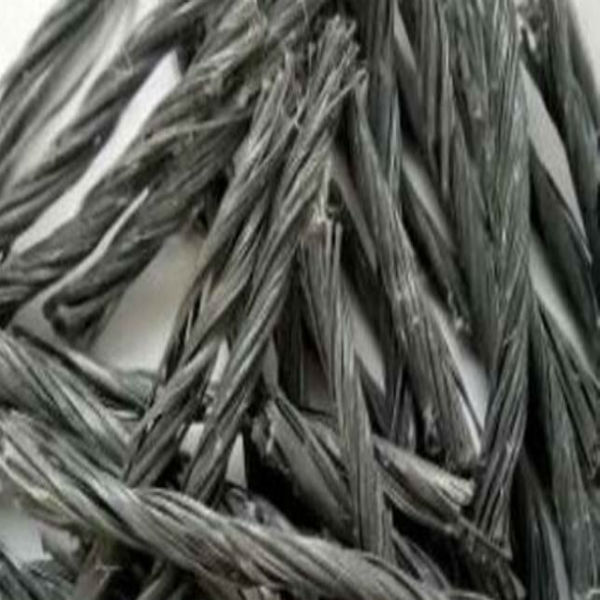

Polypropylene Fiber for Reinforcing Concrete in Industrial Flooring
1. Types of Polypropylene Fiber for Industrial Concrete Floors
Polypropylene fiber (PPF) is widely used in concrete technology as a secondary reinforcement material.
It helps reduce cracking, increase impact resistance, and improve the durability of concrete surfaces.
There are various types of polypropylene fibers available for industrial flooring applications, each designed to meet specific project requirements:
1.1. Microfibers
Microfibers are short (typically 3–20 mm), thin filaments added to the concrete mix to control plastic shrinkage and reduce the risk of early-age cracking.
These fibers disperse uniformly throughout the matrix, forming a three-dimensional reinforcement network.
1.2. Macrofibers
Macrofibers are longer and thicker than microfibers (often 30–60 mm in length) and are used as a substitute for steel mesh or light rebar in industrial floors.
They significantly enhance toughness, flexural strength, and load distribution.
1.3. Monofilament Polypropylene Fibers
These fibers are single-strand filaments with a smooth surface, offering basic crack resistance. They are mostly used for shrinkage control and to improve concrete cohesion during placement.
1.4. Fibrillated Polypropylene Fibers
Fibrillated fibers are made by splitting a film of polypropylene into a mesh-like structure.
They have high surface area and offer better mechanical bonding with the cement matrix compared to monofilament types, making them suitable for industrial floors subjected to dynamic loading.
1.5. Blended Fibers
To maximize performance, some manufacturers offer fiber blends that combine micro and macro polypropylene fibers.
This dual-level reinforcement system offers early-age crack control and long-term structural benefits.
2. Advantages and Disadvantages of Using Polypropylene Fiber in Industrial Concrete Floors
Polypropylene fiber offers numerous benefits in terms of structural performance and durability, but also comes with limitations that should be considered during project planning.
2.1. Advantages
a. Crack Control Polypropylene fibers significantly reduce the occurrence of plastic shrinkage cracks and microcracks by holding the cement matrix together during the early curing phase.
b. Increased Impact and Abrasion Resistance Industrial floors experience heavy equipment traffic, mechanical loads, and material drops. PPF enhances resistance to these impacts, extending the floor’s service life.
c. Improved Freeze-Thaw Durability PPF reduces permeability and enhances concrete's resistance to freeze-thaw cycles, making it ideal for cold storage and outdoor industrial flooring.
d. Uniform Distribution Unlike traditional rebar or mesh, polypropylene fiber disperses evenly throughout the concrete mix, ensuring uniform reinforcement and reducing labor-intensive installation processes.
e. Corrosion Resistance Polypropylene is a non-metallic, chemically inert material. It does not corrode or degrade in alkaline environments, which is a significant advantage over steel reinforcement.
f. Compatibility with Additives PPF is compatible with most concrete admixtures, including plasticizers, retarders, and air-entraining agents, allowing for customized concrete formulations.
g. Cost Efficiency While the initial material cost might be higher than traditional reinforcement, the savings in labor, installation time, and long-term maintenance make polypropylene fiber a cost-effective solution.
2.2. Disadvantages
a. Limited Structural Capacity Polypropylene fiber is not a primary structural reinforcement. It does not provide the same tensile strength or flexural capacity as steel rebar and is typically used for secondary reinforcement purposes.
b. Workability Challenges Overdosing or poor mixing can lead to fiber balling, which may affect workability and surface finish. Proper mixing protocols are essential to ensure even dispersion.
c. Surface Finish Sensitivity High volumes of fiber may impact the finishing of industrial floors, especially when a smooth surface is required. Additional finishing steps may be necessary to achieve desired aesthetics.
d. Heat Sensitivity Polypropylene has a relatively low melting point (around 160°C), which limits its performance in high-temperature environments such as foundries or heavy industrial plants.
e. Risk of Misuse Some contractors may incorrectly use PPF as a complete replacement for structural reinforcement, leading to underperformance or structural failures.
Conclusion
Polypropylene fiber has become an integral component in the construction of industrial concrete floors due to its excellent crack resistance, improved durability, and ease of incorporation into concrete mixes.
Its various forms—micro, macro, monofilament, fibrillated, and blended—offer flexibility to suit a wide range of flooring requirements.
While not a replacement for structural reinforcement, PPF is an ideal complementary solution for reducing cracking, enhancing resilience, and extending the lifespan of concrete surfaces.
To maximize its benefits, it is important to choose the right fiber type and dosage for your specific application and to follow proper mixing and placing procedures.
Despite its limitations, polypropylene fiber remains a practical, reliable, and cost-effective reinforcement technology for modern industrial concrete flooring systems.