Water-Based Curing Compounds in the Construction of Concrete or Topping Floors
1. Water-Based Acrylic Varnish for Concrete or Topping Floors
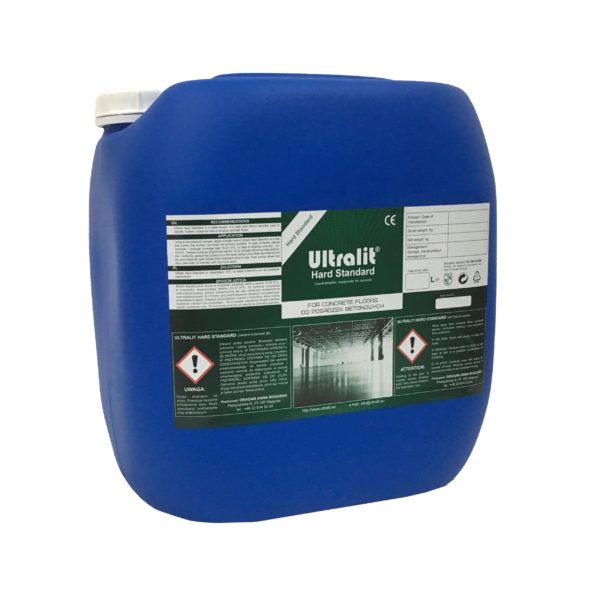
Water-based acrylic varnish plays a critical role in the protection and long-term performance of industrial concrete and topping floors.
This type of membrane-forming compound creates a protective film over the surface of freshly placed or cured concrete. It reduces water evaporation, promotes optimal hydration, and prevents surface cracking or shrinkage.
Water-based acrylic varnish is particularly valued for its low VOC emissions and eco-friendly formulation.
Compared to solvent-based alternatives, water-based varnish minimizes harmful odor release and supports safer indoor application. It is also non-flammable, making it more suitable for enclosed or poorly ventilated areas.
Upon application, the varnish forms a thin, semi-gloss film that helps retain internal moisture within the concrete matrix.
This controlled curing process enhances the development of surface hardness and compressive strength while preserving the surface’s integrity under industrial loading conditions.
Water-based acrylic varnishes are compatible with a wide range of concrete compositions, including those modified with dry shake hardeners (toppings).
The varnish’s transparent film ensures the aesthetic uniformity of colored or treated surfaces.
Key Technical Properties:
-
Solid content: 15–25%
-
Application method: Spray or roller
-
Drying time: 1–4 hours, depending on temperature and humidity
-
Coverage: 100–150 m² per 20-liter container
-
Compatible with silicate or polymer primers for multilayer systems
2. Water-Based Acrylic Impregnation for Fresh Concrete Floors
Water-based acrylic impregnations differ from traditional membrane-forming varnishes by their ability to penetrate the surface layer of concrete rather than forming a film.
These materials are formulated to saturate the uppermost layer of the slab, filling micropores and sealing capillaries.
This approach is particularly effective in newly poured floors, where early application (within the first few hours of placement) significantly enhances dustproofing and moisture retention.
The result is a dense, hardened surface that resists abrasion and wear, critical for industrial and commercial environments.
Water-based impregnations are non-toxic and free from aggressive solvents, which enables their use in food processing areas and public facilities.
Many products are formulated with nano-sized polymer particles that deeply integrate into the cementitious matrix, forming a breathable yet water-repellent structure.
Key Benefits:
-
Deep surface consolidation
-
Reduced dust formation and capillary absorption
-
Environmentally friendly composition
-
Improved substrate bonding for subsequent coatings
-
Enhanced chemical resistance when layered with epoxy or polyurethane systems
These impregnations are also compatible with silicate-based densifiers or lithium silicate finishes, allowing the creation of hybrid surface protection systems with extended service life.
3. Safety Measures in the Application of Water-Based Membrane-Forming Compounds
Although water-based membrane-forming compounds are generally safer than solvent-based products, strict safety protocols should still be followed during their application.
Personal Protective Equipment (PPE):
-
Use chemical-resistant gloves and safety goggles to avoid skin and eye contact.
-
Wear long-sleeved protective clothing and safety shoes.
-
For large-scale applications, respiratory protection is advised, especially in areas with poor air circulation.
Workplace Safety Protocols:
-
Ensure adequate ventilation even though the product has low VOC content.
-
Avoid applying under direct sunlight or in strong wind conditions to prevent premature drying.
-
Do not mix with incompatible chemicals unless approved by the manufacturer.
-
Store in original containers away from freezing temperatures.
Disposal and Environmental Considerations:
-
Water-based varnishes and impregnations should not be poured into drains or soil.
-
Dispose of residual product and containers in accordance with local environmental regulations.
-
Clean tools with water immediately after application to prevent hardening.
Adhering to these guidelines ensures both user safety and the optimal performance of the applied product.
4. Advantages of Using Water-Based Sealers and Varnishes in Industrial Concrete and Topping Floor Applications
The application of membrane-forming sealers is a critical step in the curing and protection of industrial concrete and topping floors.
Water-based systems offer a comprehensive set of advantages that support both performance and sustainability.
Environmental Benefits:
-
Low VOC emission contributes to safer air quality during and after installation.
-
No harmful solvent fumes, reducing risks in food, pharmaceutical, or educational facilities.
-
Suitable for green building certifications (e.g., LEED).
Application Efficiency:
-
Quick drying and easy cleanup using water-based tools
-
Uniform coverage and non-yellowing finish on decorative or colored surfaces
-
Can be applied manually or with spraying equipment on both large and small projects
Mechanical and Chemical Durability:
-
Enhanced hydration results in stronger and more durable concrete
-
Reduced surface dusting and increased resistance to abrasion
-
Sealed surface repels water, oil, and industrial contaminants
Compatibility with Topping Systems:
-
Does not interfere with the color or bonding of dry shake hardeners
-
Allows for sequential layering with primers, epoxy, or polyurethane coatings
Cost-Effectiveness:
-
Lower application costs due to water cleanup and non-hazardous classification
-
Extended service life of floors reduces maintenance and repair frequency
In summary, water-based membrane-forming compounds are a technically advanced and sustainable solution for the curing and protection of industrial concrete and topping floors.
Their environmental compatibility, ease of application, and performance benefits make them a preferred choice across various industrial and commercial construction projects.