MasterTop BC 375N | Polyurethane floors | Polyurethane floor covering
Two-component rigid-elastic self-leveling colored polyurethane composition without volatile solvents
Polymer industrial floors
Polyurethane floors for the garage
Polyurethane floors for the warehouse
MasterTop BC 375N | Polyurethane two-component coating that does not contain solvents
- MasterTop BC 375N has a certain elasticity to compensate for minor deformations of the base, but at the same time, it is able to withstand significant production loads.
-
It is intended for use in systems of industrial and decorative polyurethane floors coated with MasterTop as the main layer of the system.
-
It has low viscosity and spreads well.
- Complies with EN 1504, EN 13813.
Fields of application
It can be used for rooms with moderate and significant loads, for example.
Scope of application
-
Polyurethane floors for the garage.
-
Polyurethane floors for parking.
-
Polyurethane floors for warehouse.
-
Polyurethane floors for car service.
-
Polyurethane floors for the bakery.
-
Polyurethane floors for car service.
-
Polyurethane floors for industrial premises.
-
Polyurethane floors for the terrace.
- Polyurethane floors for an operational roof
Advantages
-
It is used inside premises;
-
For predominantly dry operating conditions;
-
It is used as the main coating layer in MasterTop 1324, 1324R polyurethane floor covering systems, as well as in parking lot coatings;
-
If necessary, it is allowed to use the material as a repair composition in a mixture with calcined quartz sand;
- The proportions of binder/quartz sand and sand fractions must be selected based on the types of defects to be repaired.
-
MasterTop BC 375N has high strength, is resistant to abrasive loads and exposure to many chemical reagents, which makes it possible to use it indoors with moderate and significant operational loads.
-
Due to the low viscosity, the composition spreads well (levels), providing an excellent smooth coating surface.
-
The surface is easy to clean and clean, which gives a high level of hygiene in the room.
-
The material does not contain volatile substances (corresponds to AgBB) and has a specially developed hardener, so there are no internal stresses in the coating after polymerization.
-
Does not have an unpleasant smell when applied.
- It has quite good chemical resistance.
Technical characteristics
|
Appearance of the coating |
Glossy painted (according to the RAL table) surface. Under the influence of UV and chemicals, a change in color can be observed. |
|
Density |
1.45 kg/cm3
|
|
Viscosity |
2200 mPa*s
|
|
Shore hardness (7 days) |
70 MPa
|
|
Compressive strength |
50-55 N/mm2
|
|
Bending strength |
32 N/mm2
|
|
Elongation at break (DIN 51504) |
10%
|
|
Base temperature |
+5°C...+30°C
|
|
Maximum air humidity |
75%
|
|
Coating installation time (minutes) |
30 minutes
|
|
Readiness for pedestrian loads |
16 hours
|
|
Reapplication interval |
12h - 72h
|
|
The final strength set |
7 days
|
Application procedure of polyurethane coating
-
The MasterTop BC 375N material is used for all types of mineral-based materials.
-
The most common types are new or old concrete bases, self- leveling cement masses, cement-sand screeds (CPS).
-
The maximum permissible slope of the base when using MasterTop BC 375 N as a bulk layer is no more than 1%.
-
The use of this material without the MasterTop primer is not acceptable.
-
Check the compatibility of materials and system options with the regional representatives of BASF, FLOORTOP.
-
Works on the arrangement of a polymer coating using MasterTop BC 375 N on traditional concrete and CPS must be carried out, guided by the technology of the selected MasterTop coating system.
-
The requirements for the foundation are set out in more detail in the technical descriptions of the primers used together with this material and are mandatory for information when planning MasterTop floor coverings.
- For more detailed information on this section, contact BASF regional representatives.
Preparation of the base
-
The most optimal method of preparing the base is chosen depending on its condition, structure, existing defects, expected operational effects and the selected polymer coating system.
-
It is necessary to remember that the mechanical preparation of the base is used not only to remove dirt and open pores, but also to increase the adhesion of the polymer coating.
-
The more textured the surface is as a result of processing, the higher the adhesion of the coating , therefore, the higher its resistance to dynamic loads and the longer the service life.
-
Before applying the base layer of MasterTop BC 375N, the properly primed surface of the base should look like wet concrete without dry or matte spots, have a clearly visible polymer membraine.
-
The primed surface should not stick or have a greasy coating, there should be no puddles or thick layers of material on the surface, as well as visually visible pores.
-
On the primed surface, the presence of contamination, such as: traces of lubricants, various oils, fats, various finishing materials, dust, etc., is unacceptable.
-
The last layer of the primer, if it is provided by the construction of the coating, should be sprinkled with calcined quartz sand (the consumption and fraction of sand is determined by the construction of the coating).
-
During the construction of the polymer coating , it is necessary to carefully observe interlayer intervals between layers.
-
The maximum and minimum interlayer intervals between the MasterTop BC 375N layer and the primer layers are given in the technical descriptions for the corresponding primer materials.
Conditions of application of polyurethane composition
-
The temperature of the base, during the application of the material, should be from +5°С to +30°С (it is necessary to remember that sometimes the temperature of the base can be lower than the air temperature by 3-4°С).
-
It is extremely undesirable, within the framework of one working zone, to have areas with a large difference in temperature of the base (some factors can lead to this phenomenon, for example, sunlight, different equipment in the room, temperature processes in adjacent rooms, etc.).
-
The easiest way to measure the temperature of the base is with a pyrometer (infrared non-contact thermometer).
-
The temperature of the base should be 3ºС higher than the "dew point".
-
"Dew point" is the air temperature at which condensation forms in the room.
-
It depends on the humidity of the air in the room and is determined according to the calculation table (see the appendix "Dew point calculation table").
-
The air temperature on the construction site should be from +5°С to +30°С.
-
The presence of drafts is extremely undesirable - this can lead to surface defects: bubbles, ripples, shagreen, sticky areas.
-
The humidity of the air at the object should not be more than 75%.
-
Air humidity, air temperature and "dew point" are most conveniently measured using a thermohygrometer.
-
The temperature of the material components should be around +20°C.
-
At a high temperature at the object, it is desirable to have a material temperature of about +15°C, and at a low temperature at the object, on the contrary, it is desirable to have a material temperature of about +25°C.
-
The chemical reaction between components "A" and "B" is exothermic, i.e. occurs with the release of heat, which reduces the lifetime of the composition, therefore, the volume of the sealed material must be related to the number of stackers, the speed and method of application, and the temperature on the object.
-
It is necessary to remember that the temperature of the material and the base, humidity and air temperature directly affect such properties of materials as viscosity (fluidity), life time, polymerization time, appearance of the surface and the presence/absence of various defects.
Preparation and application of the material
-
The material has two components ("A" and "B"), which are in a carefully selected ratio. If it is necessary to partially use the packaging, the ratio of components should be strictly observed!
-
If this rule is not followed, the appearance of a greasy film on the surface, final stickiness or loss of physical and mechanical properties of the layer is possible.
-
To prepare the composition, it is necessary to open the container with component "A", mix it thoroughly in the factory packaging for 4-5 minutes using a low-speed mixer with a screw nozzle (300 - 400 rpm), open the container with component "B", pour it completely it into a container with component "A" and mix for 2-3 minutes, then pour into a clean container and mix again for 1-2 minutes until a homogeneous mixture is formed.
-
Particular attention will be paid to thorough mixing of the material in the area of the bottom and walls of the bucket, in order to avoid coating defects (poorly mixed components do not fully enter into a chemical reaction).
-
When mixing the components, the nozzle of the mixer should not rise above the material level so as not to draw excess air into the composition (this may complicate rolling with a needle roller).
-
The chemical reaction between components "A" and "B" is exothermic (occurs with the release of heat, which reduces the life time of the composition), so the volume of the sealed material must be related to the number of stackers, the speed and method of application, and the temperature on the object.
-
Every minute of finding a mixed set of material ("A"+"B") in a large volume (in a bucket) reduces the life time and, consequently, the time of processing the material.
-
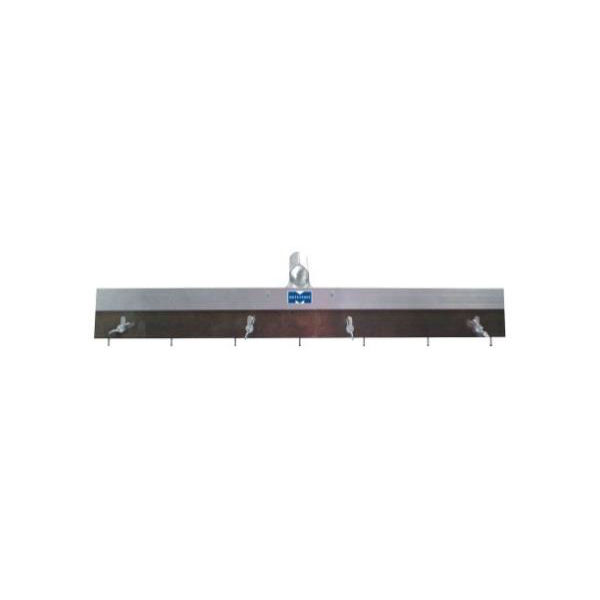
After preparation, the composition of MasterTop BC 375N is poured as quickly as possible onto the primed base and distributed, depending on the design of the coating, with the help of a notched trowel with a triangular tooth (filling layer) or a squeegee with an adjustable gap (supporting element - thin pins).
-
Tooth #5 is recommended for applying up to 1.0 kg/m2 and #25 for applying up to 2.5 kg/m2 and #48 for applying up to 4 kg/m2 (numbers are given in the PPW catalog).
-
The consumption of the composition, and, consequently, the thickness of the coating, also depend on the angle of inclination of the toothed spatula and the amount of movement during the distribution of the material.
-
10-15 minutes after the distribution of the set of material, it is necessary to process the laid bulk layer with a needle (deaeration) roller to remove air bubbles and facilitate the process of leveling the layer.
-
It is necessary to move on the fresh layer in special shoes - wet shoes (shoes with spikes on the soles).
-
The backfill layer is not processed.
-
When distributing the layer and, especially when processing with a needle roller, it is necessary to carefully monitor the lifetime of the material, since the viscosity of the material gradually increases and at the end of the lifetime, the marks from the notched trowel, wet feet and needle roller may not spread completely, leaving visible defects on the coating.
-
When joining two sets of material later than after 15-20 minutes (at a temperature of +23ºС), a visible border may form.
-
Applying the material should start from the wall opposite the exit.
-
In rooms with complex geometry, we recommend thinking over the schedule and plan of pouring works in advance.
-
The inter-layer interval at a temperature of +23°C should be no more than 48 hours (in structures with backfilling with quartz sand, the application of subsequent layers of coating on a rough surface is allowed within 72 hours).
-
The following layers must be applied no earlier than the previous layer reaches the state "on the peel", i.e. does not stick to fingers and does not leave traces when touched.
-
The minimum and maximum interlayer interval can be more or less than specified and directly depends on the temperature at the object.
Consumption
The material consumption of the selected coating system type (MasterTop 1324, 1324R), as well as the requirements of a specific project.
Cleaning tools
-
After finishing the work, the tools are cleaned with an organic solvent.
- Solidified material can only be removed mechanically.
Safety measures
-
When working with the material, it is necessary to ensure ventilation of the room.
-
When working, it is necessary to use special clothes and shoes, protective glasses and gloves.
-
Do not allow the material to come into contact with open areas of the skin.
- In case of contact with eyes or mouth, rinse with plenty of water and consult a doctor immediately.
Ecology/waste disposal
-
Components of materials in a liquid state are dangerous for water and aquatic organisms.
-
Do not allow it to enter sewers, water bodies and soil.
-
MasterTop BC 375N is not dangerous when cured.
- Dispose of in accordance with local legislation.
Precautions
- During the laying process, the ambient temperature should be in the range from +10 ºС to +30 ºС.
-
Working waterproofing must be present under the concrete slab on which the MasterTop coating is laid.
-
The product must be used by qualified installers.
-
For use in cold conditions, warm up the material and fillers in advance (1-2 days in advance).
-
The strength class of the plate/screed for applying MasterTop must be at least C25.
-
The working and curing times of resin-based systems depend on the temperature of the environment and the surface, relative humidity of the air.
-
At low temperatures, the reaction slows down, which prolongs the time of working with the mixture and the setting time.
-
High temperatures accelerate the reaction, as a result of which the time of working with the mixture and the setting time are reduced.
-
For complete hardening of the material, the temperature of the environment and the surface should not fall below the specified minimum limits.
-
Does not apply without a primer.
-
Avoid contact with water for 24 hours after installation.
-
If this happens, the contact coating should be completely replaced.
-
Observe the ratio of components, do not add solvent.
-
Do not mix the ingredients by hand.
Packaging
-
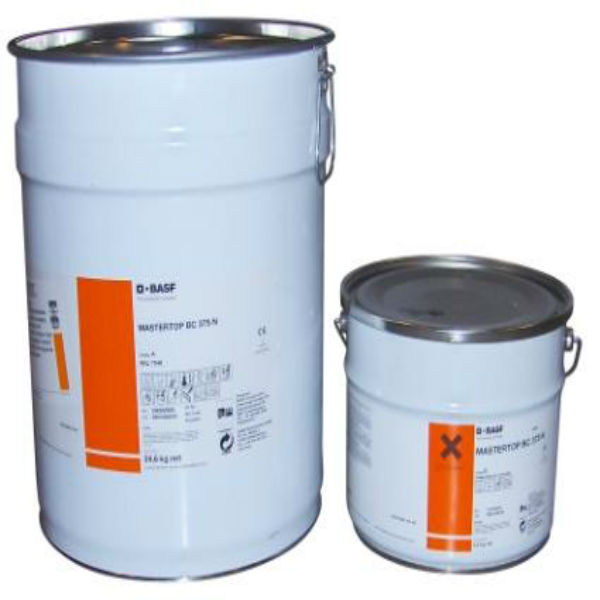
The material is delivered in metal buckets.
-
Component A – 24.6 kg.
-
Component B – 5.4 kg.
- The weight of the set is 30 kg.
Storage
The material should be stored in the original packaging in a dry, cool place (at a temperature of +5°C +25°C.
Expiry date
Under appropriate storage conditions - 12 months from the date of manufacture.
Safety measures
-
Do not approach warehouses during a fire.
-
Products should be stored in well-ventilated areas.
-
During work, you should use work clothes, protective gloves, glasses and a mask in accordance with the rules of occupational health and safety.
-
Since non-hardened materials have an irritating effect, the components should not be allowed to come into contact with the skin and eyes, and in case of contact, it is necessary to wash with plenty of water.
-
If swallowed, consult a doctor immediately.
-
It is forbidden to bring food and drinks to the construction site where the product is used.
- The product should be stored out of the reach of children.