

Acid-resistant floor tiles
Acid-resistant ceramic tiles for food production
Antibacterial Acid Resistant Floor Tile
Wear-resistant tiles for the food industry
Temperature resistant tiles for production
Chemical resistant ceramic tiles | Industrial ceramic tiles
Floors for food production must have high-quality, both physical and mechanical, and high chemical characteristics.
For the food industry, various flooring systems are used.
Common coatings for food production
-
Acrylic floors.
-
MMA floors.
-
Polyuria floors.
- These polymer coatings are applied to a prepared concrete base, with a thickness of 1 mm to 9 mm.
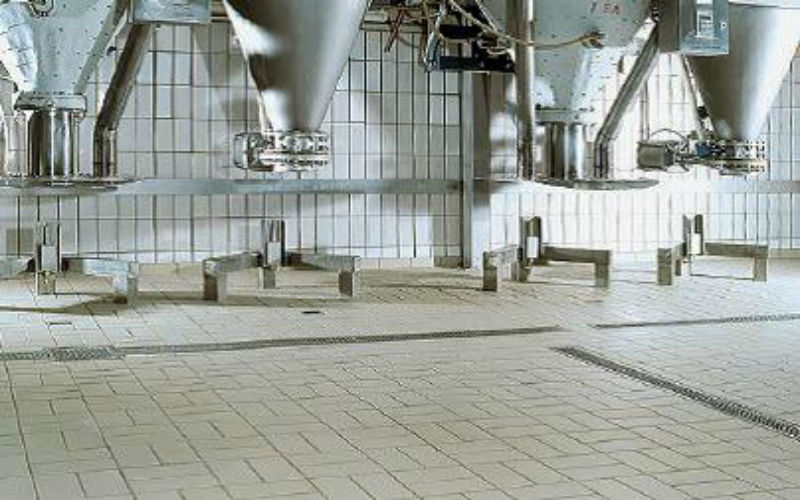
Polyurethane-cement floors for food production
Industrial ceramic tiles
Consider an alternative coating for industrial premises with an aggressive environment.
-
One of the most popular effective coatings in the world for food production is also acid-resistant tiles (acid-resistant).
- Consider acid-resistant FERRUM floor tiles, one of the world's largest manufacturers, Agrob Buchtal (Germany).
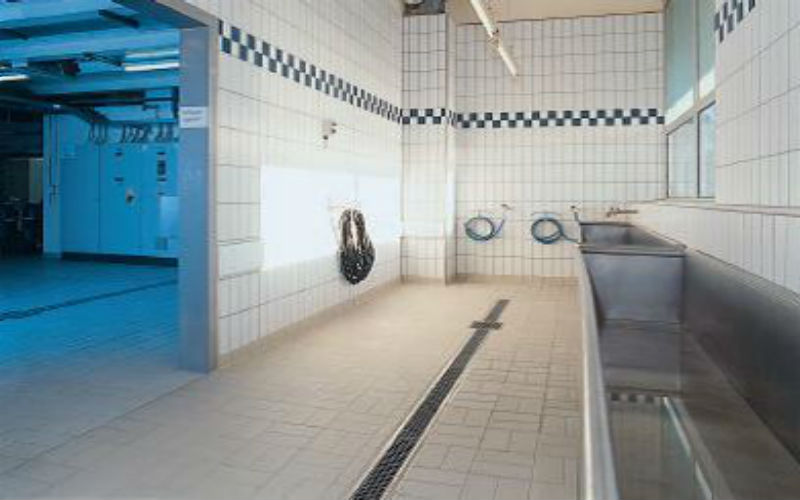
Acid-resistant tiles for food production
Agrob Buchtal Ferrum | Acid-resistant floor tiles | Chemical resistant ceramic tiles.
Agrob Buchtal Ferrum | Quality pottery is a worthwhile investment.
-
Such ceramic floor tiles include the Ferrum series, which has been specially developed for the demanding requirements of industrial premises.
-
Dyed in mass, unglazed on both sides - fired boards are especially safe in terms of anti-slip and thus prevent accidents at work.
-
This ceramic, extremely strong and breaking load, and on it is many times greater than the breaking load, for concrete or other finishing materials of a similar purpose.
-
A technically sophisticated supplementary system that includes curved skirting boards, tiles and flat drains.
-
All this facilitates the implementation of complex production specific tasks.
-
In addition, the Ferrum series offers all the benefits of high quality architectural ceramics made in Germany.
-
The tile is fast and inexpensive to install, resistant to chemical detergents, humidity and other stresses that are encountered in industrial plants.
-
Another convincing advantage of ceramics is their virtually unlimited service life.
-
In addition, ceramics do not burn.
-
And in conclusion, it can be noted that the peculiarity of this ceramics allows you to reduce the cost of detergents.
- To sum it up - the Ferrum series is a really worthwhile investment.
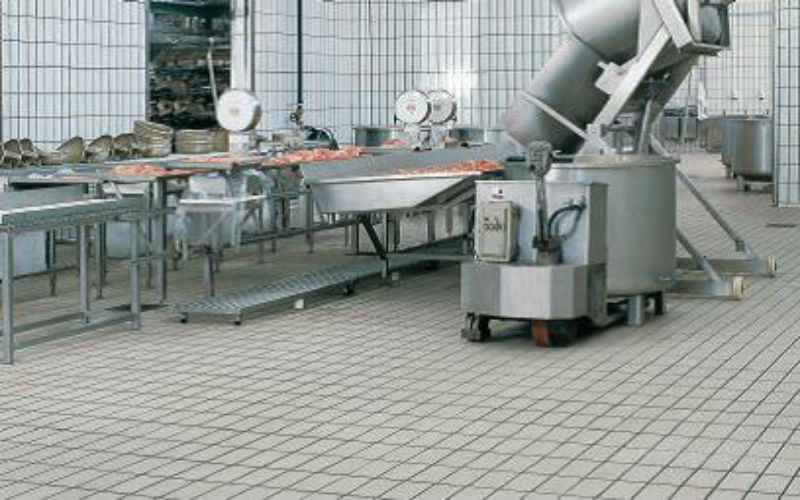
Acid-resistant tiles FERRUM
Agrob Buchtal | The world-famous manufacturer of ceramics contributes to equipping many areas of human activity, not only with high-quality products, but also with a high level of service.
Architects, engineers and product planners can always count on the help of Agrob Buchtal Architectural Service, a special division that has been formed to provide professional support to clients, at all stages of design work.
Instructions for laying tiles under mechanical stress
-
The base must be solid and level.
-
The surface must have a finely porous structure.
-
Grease stains, dirt, various kinds of chemical deposits and contamination must be carefully removed from the surface.
-
The base must comply with DIN 18202 in terms of age and evenness.
-
Irregularities on the walls should be leveled.
-
Before laying tiles, self- leveling floors and cementitious screeds must be primed with PCI Gisogrund.
-
Before laying PCI Seccoral 2K Rapid waterproofing, it is enough to moisten the surface with water.
-
Waterproofing PCI Seccoral 2K Rapid, is laid in 2 layers, with a total thickness of about 2 mm.
-
Wall-to-wall, wall-to-floor joints, corners, expansion joints must be sealed with PCI Pecitape Objekt sealing tape.
-
Hollow-free laying of tiles must be done with PCI Nanoflott elastic adhesive.
- Apply a contact layer (“on the sdir”) of the tile adhesive, using a notched trowel, to the base, then apply the main layer of adhesive in such an amount that no voids form under the tile.
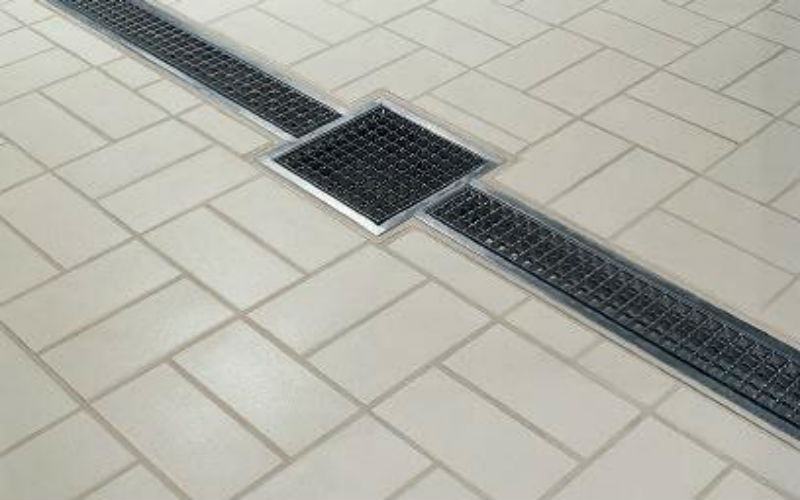
Industrial ceramic tiles
Grouting
-
Grouting should be done with a polymer modified, stain-resistant grout, cement-based, PCI Durafug NT.
-
After grouting the tiles, rinse the surfaces of the tiles with water, then wipe them with a dry cloth or foam rubber.
-
Lay DI N Polyband in expansion joints and then fill them with polyurethane sealant, PCI Elritan 140.
-
Before laying the polyurethane sealant, expansion joints must be primed with PCI Elastoprimer 110 primer.
-
These guidelines are advisory in nature.
-
For practical application, you can obtain information from the manufacturer of material systems.
-
Strictly follow the recommendations in the material descriptions of the German company PCI A ugsburg GmbH.
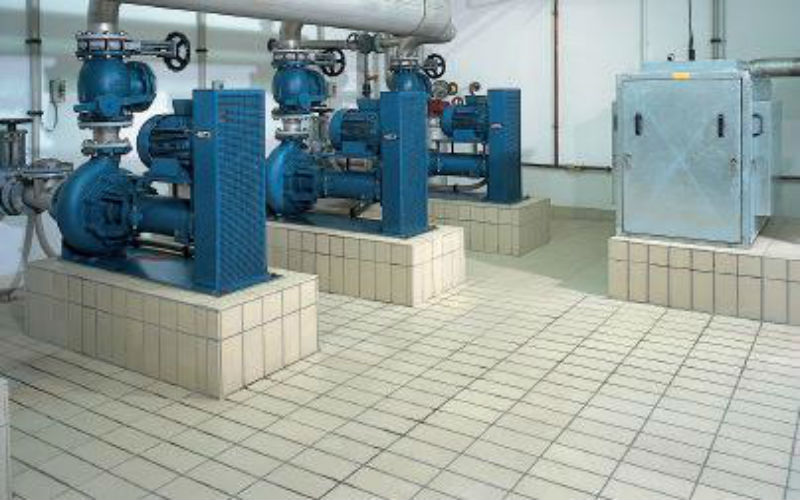
Chemical resistant ceramic tiles
Consumption of special PCI materials
-
PCI G isogrund: approx. 0.15 - 0.2 l / m2.
-
PCI Rapid 2K: Approx. 4.0 kg/m2.
- PCI N anoflott light: approx. 4.0 - 5.0 kg/m2.
Tiling instructions - mechanical and chemical influences
-
The base must be solid and level.
-
The surface must have a finely porous structure.
-
Grease stains, dirt, various kinds of chemical deposits and contamination must be carefully removed from the surface, using a shot blasting machine or cutter.
-
The base, in terms of age and evenness, must comply with DIN 18202.
- Before applying waterproofing, the base must be primed with an epoxy primer, PCI Epoxigrund 390, with sanding fr. 0.3-0.8 mm.
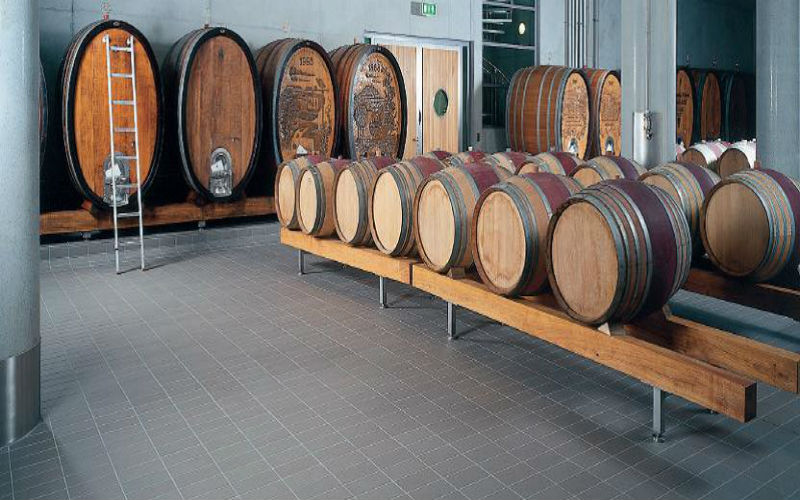
Chemical-resistant tiles for industrial premises
Waterproofing
-
PCI Apoflex waterproofing is applied in 2 layers, with a total thickness of about 1-2 mm.
- Wall-to-wall, wall-to-floor connections, corners, expansion joints must be sealed with sealing tape PCI Pecitape Objekt.
Laying tiles | Industrial ceramic tiles
-
Tiles are laid using a two-component epoxy adhesive, PCI Durapox NT plus, using the “double-sided coating” method.
-
Apply the contact layer ("on the peel") of the tile adhesive, using a notched trowel onto the substrate.
-
On a fresh contact layer, apply the main layer with a notched trowel, with a tooth size of 6-8 mm.
- Then apply epoxy adhesive to the tile and lay it on the base with adhesive.
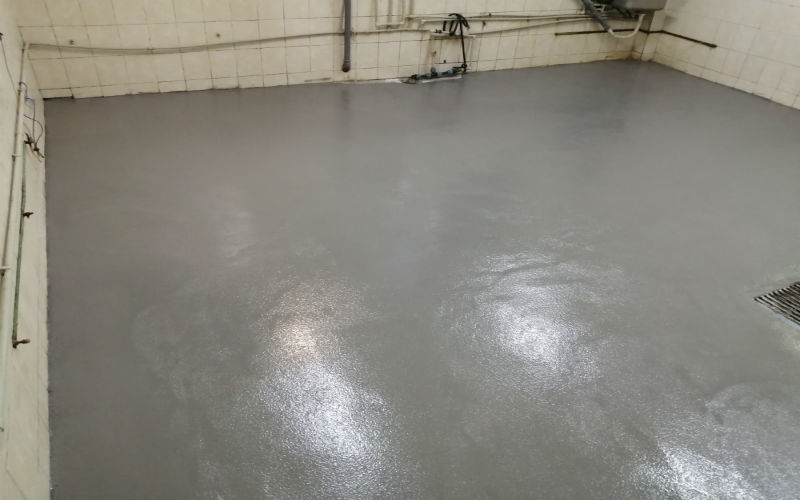
Anti-slip coating for production
Grouting
-
Grouting is done with PCI Dura pox NT plus material, using a rubber spatula or a construction gun (syringing).
-
After 5-10 minutes, after grouting, the surface of the tile must be washed with a hard sponge, the remains of the grout should be removed with a soft foam sponge.
- If, after washing, grout residue remains, it can be washed off with a PCI Spezial Reiniger Epoxi cleaner.
