

Repair of polymer flooring
Epoxy floor repairs
Polymer coating repair
Polymer floor coverings are subject to wear, like all other floor coverings.
The durability of polymer coatings, first of all, depends on an effective design solution at the design stage, and only then, on the quality of the base, the equipment used and the experience of the contractor.
Design bureaus do not always have experience and expertise, where and what kind of polymer coatings should be applied.
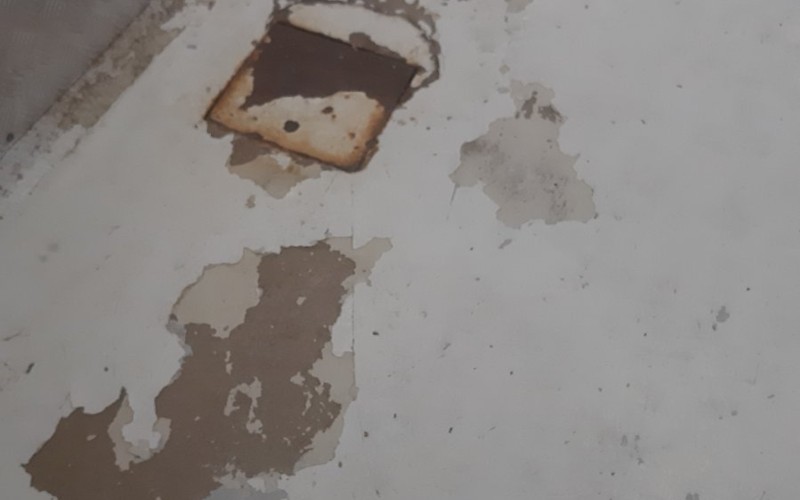
Worn polymer floor
What should a designer consider when installing a polymer floor?
-
How will polymer floors be used?
-
What will be the loads?
-
What aggressive environment will affect the polymer coating?
-
What temperature will affect the polymer floor?
-
Will there be wet or dry processes in this room?
-
An understanding of the groundwater level or possible moisture capillary pressure in the floors is necessary in order to provide for waterproofing.
- How will the cleaning and cleaning of polymer floors take place?
Therefore, before including the type of polymer coating in the project, it is better to consult with polymer coating manufacturers, contractors, colleagues, trading companies and make the right choice of technology.
Read our FAQ section, in which we answer the question "Repair of epoxy floors" or " Repair of cracks in concrete floor "
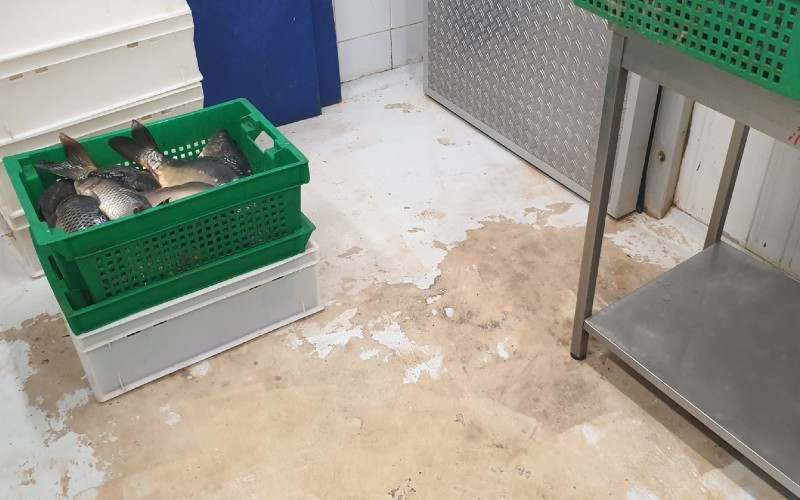
Polymer floors for the fish shop
Standard Guidelines for Designing Resin Floors
Resin floors for wet process rooms
In rooms where wet processes are provided, it is better to use thick-layer coatings from 2 mm.
In case of damage to the thin-layer coating from mechanical impact (a heavy object, tool, part fell), visually, it is possible not to see a breakdown in the bulk coating.
However, during operation, moisture will systematically get under the coating, which will lead to delamination of the polymer layer.
Of course, a thin-layer type of system will work, but in practice, much less than thicker coatings.
Read our "Real Projects" section, in which we discuss technology based on the real work of our team and our partners "Repair of polymer floor."
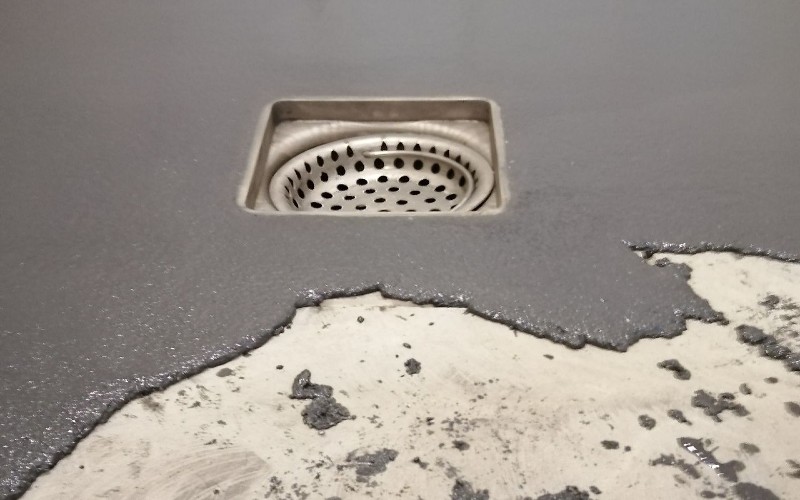
Polymer floors for wet areas
Temperature resistant polymer floors
In rooms where hot water or steam cleaning will take place, polyurethane-cement or more complex hybrid systems must be used to resist moisture and heat.
Thin-layer epoxy floors in such conditions will collapse and “shoot off”.
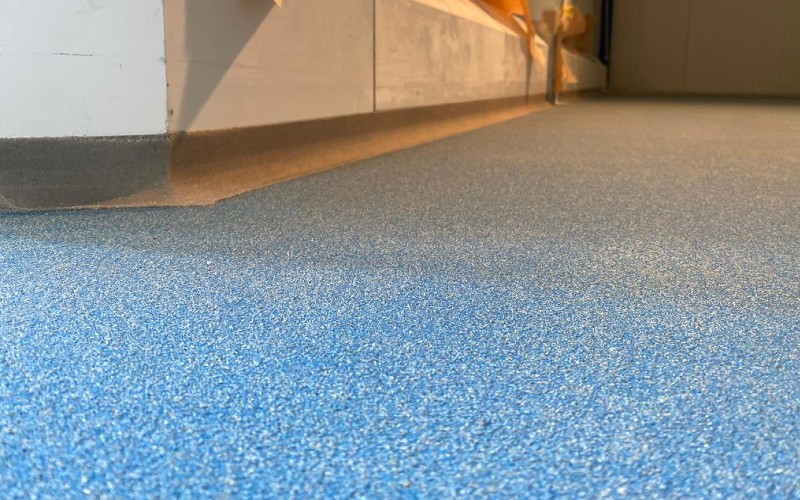
Temperature resistant antibacterial polymer floors
Polymer floors for parking
For parking lots, it is better to use elastic polymer coatings that will be resistant to dynamic loads, resistant to abrasion and aggressive environments, and sometimes resistant to ultraviolet radiation.
In Ukraine, polyurethane and epoxy filling systems for parking are popular.
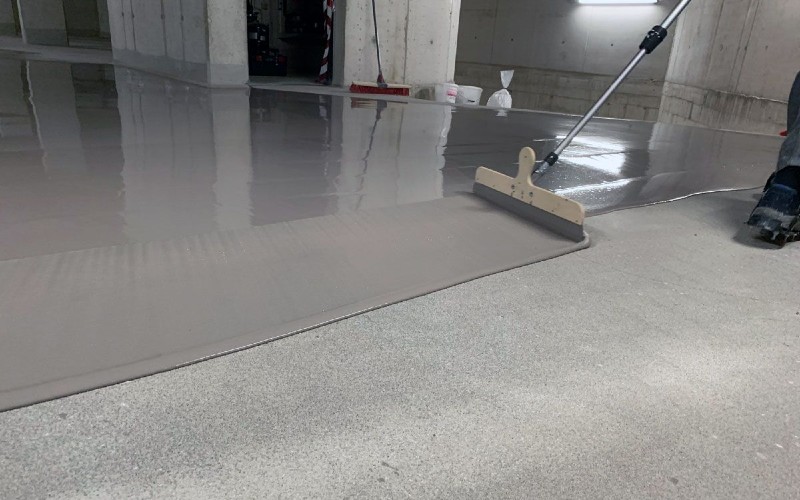
Polymer floors for parking
Types of natural wear or damage to self-leveling floors
The most popular type of polymer coating wear is when the coating is wiped down to concrete.
These patches may appear in areas of high impact on floors, in the form of spots.
-
Pedestrian areas.
- Areas of movement of machinery, equipment and mechanisms.
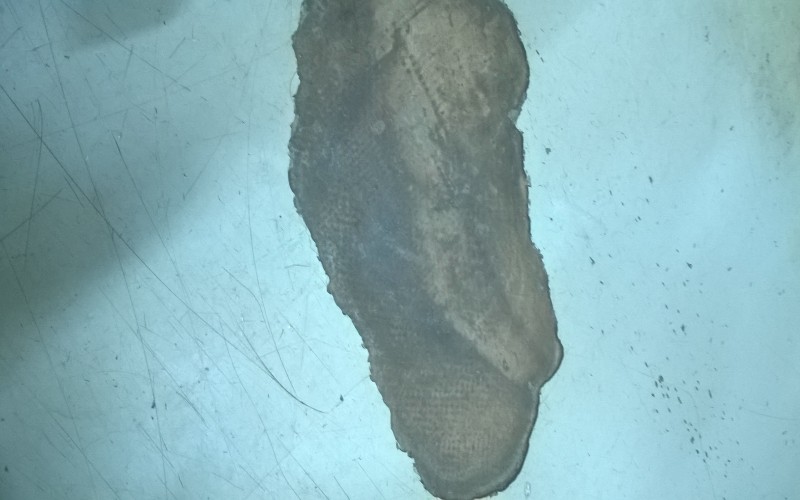
Worn epoxy floors in the office
Peeling of the polymer coating
Such damage occurs if there is moisture in the concrete or the surface was poorly mechanically prepared, without primer, which led to poor adhesion of the polymer coating to concrete.
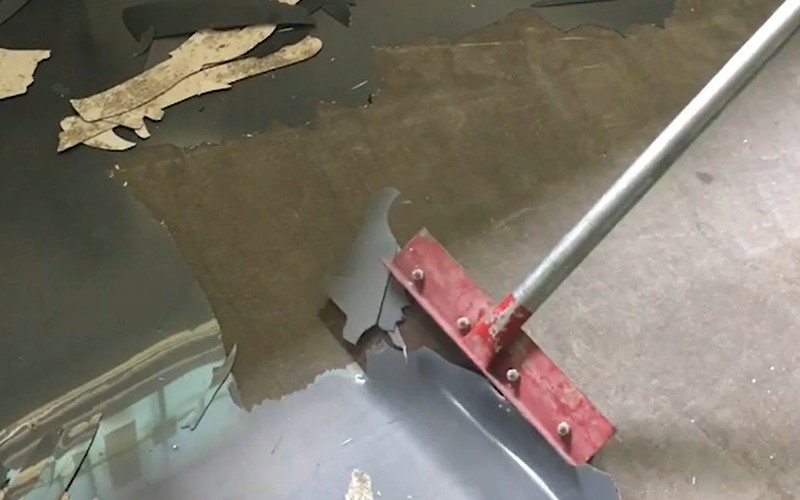
Peeling of the polymer floor
Cracks in the polymer coating
Such damage is possible if cracks form in the concrete floor or the coating is exposed to high temperatures.
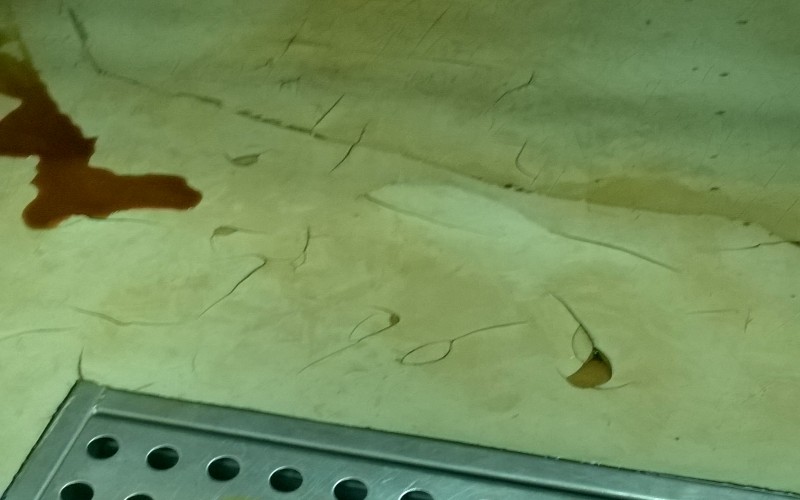
Cracks in polymer floors
Local sinks or potholes
When heavy tools or parts fall, not only the self-leveling coating is destroyed, but also the upper layer that carries the concrete floor.
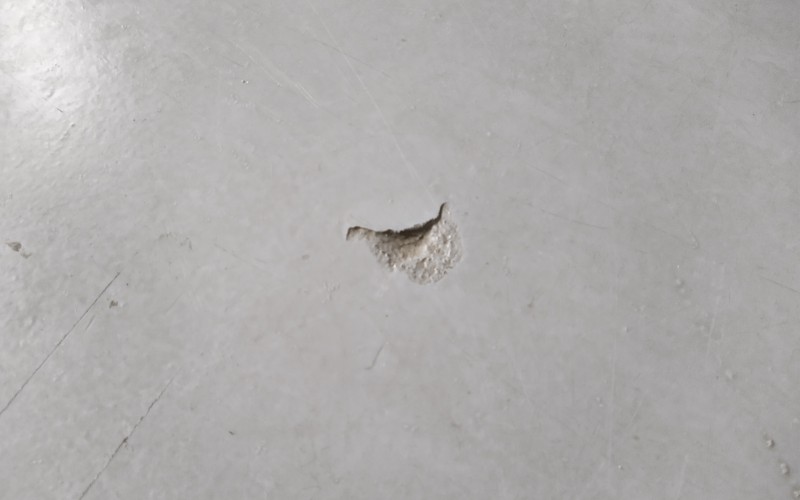
Washbasins in resin floors
Formation of bubbles during the installation of polymer floors
Bubbles in flooring occur for seven main reasons
-
Degassing.
-
Draft.
-
High temperature/humidity.
-
Sunlight.
-
Bad mixing.
-
No needle roller rolling.
- Humidity / high humidity.
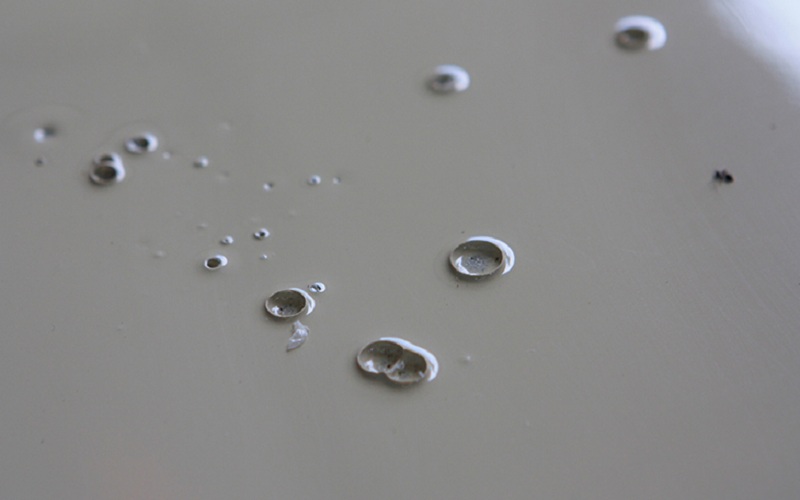
Bubbles in polymer floors
How to effectively repair the polymer flooring?
Repair of a polymer floor without mechanical preparation
-
The worn out polymer base is thoroughly cleaned, cleaned and degreased. After that, 2-3 layers of a new epoxy, polyurethane or MMA coating are applied.
- In this case, the cost of work is reduced, but the service life will be less than if the base is mechanically prepared.
Repair of a polymer coating using mechanical preparation of the base
-
It is necessary to dismantle the old worn coating using grinding or milling equipment.
-
Carry out a thorough dedusting of the surface.
-
Prime the concrete floor.
-
Apply a new polymer coating.
- This type of repair creates a new coating, almost like a new floor, with good adhesion and durability.
Read our section "Questions and Answers", where we answer the question "Repair of a concrete floor in a warehouse."
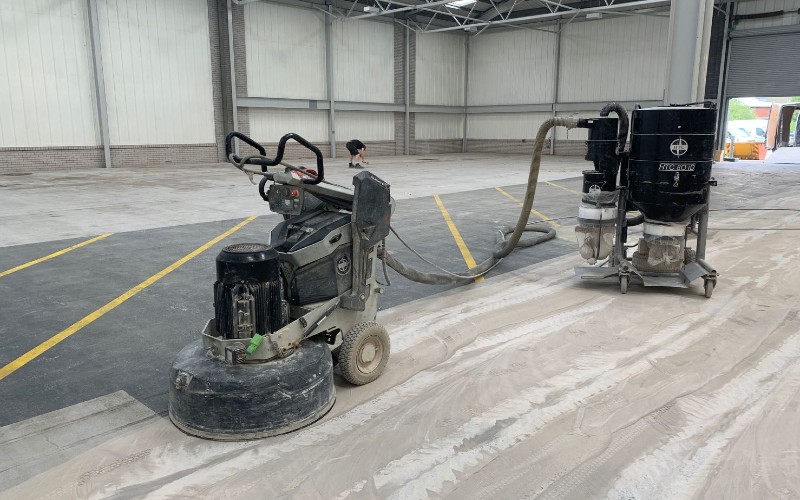
Dismantling of the polymer flooring
Repair of sinks, potholes, caverns in polymer floors
-
This type of repair is carried out using repair compounds for concrete and polymer resin.
- A local section of the concrete base is cut out, filled with a repair compound, polished to level the plane, and a polymer coating is applied on top.
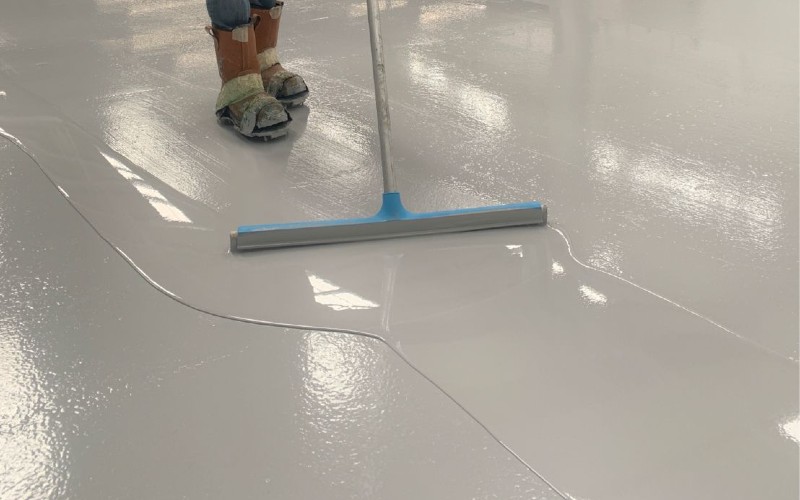
Polymer coating
Repair bubbles in polymer floors
If there are few bubbles and they are large, then the bubble is cut out and the void is filled with a non-shrinking polymer resin. Of course, when there are many small volcanoes, it is easier to redo the work.
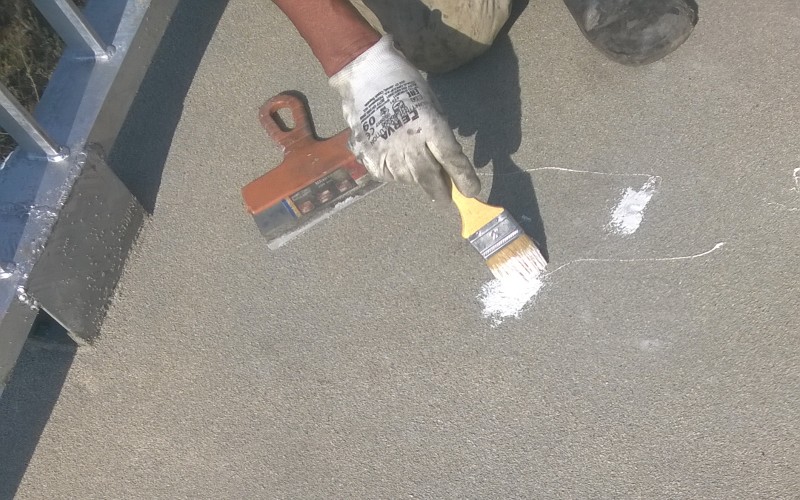
Repair bubbles in resin coating
Local repairs of the polymer coating will definitely stand out against the background of the old coating, with the formation of joints and seams, thereby violating the seamlessness of the system.
"Repair resin flooring efficiently"
If you liked this article and found it helpful,
