

Sealing concrete joints
Polyurethane sealant MasterSeal 474 NP
Sealing expansion joint
Sealing joints in concrete floors after cutting
Why seal expansion joints in concrete floors?
When installing industrial concrete floors, in order to prevent cracking, on the second or third day, after acceptance and grouting of concrete, expansion joints are cut.
Depending on the load, the seams can be cut with 6*6 m2 or 3*4 m2 cards using a joint cutter.
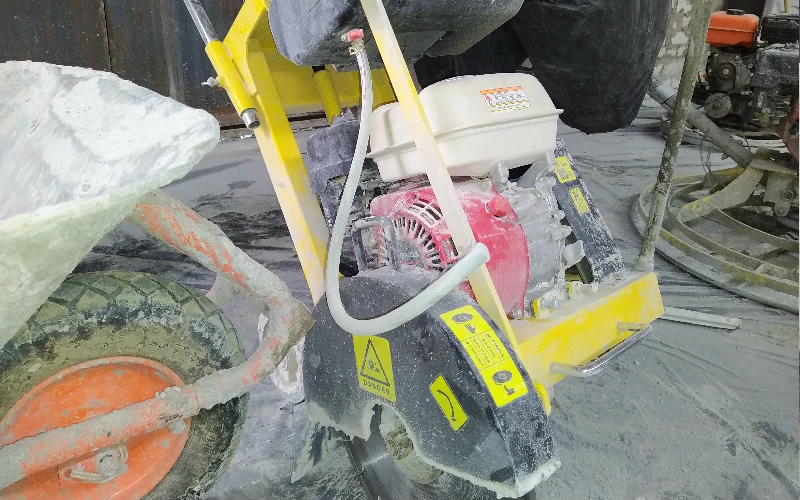
Joint cutter for concrete floors
The presence of control joints minimizes cracking in the concrete floor during maturation and thermal expansion of the finished concrete floor.
The width of the seam after cutting is 5 mm.
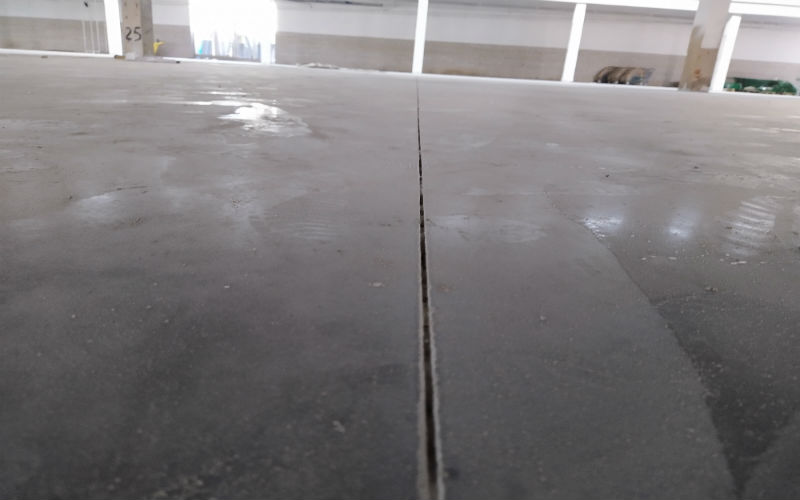
Cutting shrink seams
Recommendations for sealing expansion joints with sealant
Concrete floor, must mature 28 days. Only after a month, it is necessary to start sealing the seam with sealant.
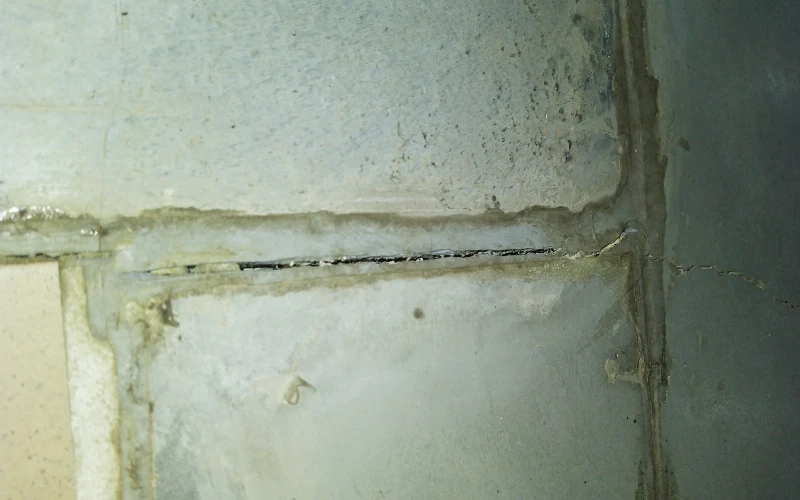
Very often, in order to deliver the object faster, contractors fill the seams immediately after cutting, which subsequently leads to the separation of the sealant from the edges of the seam.
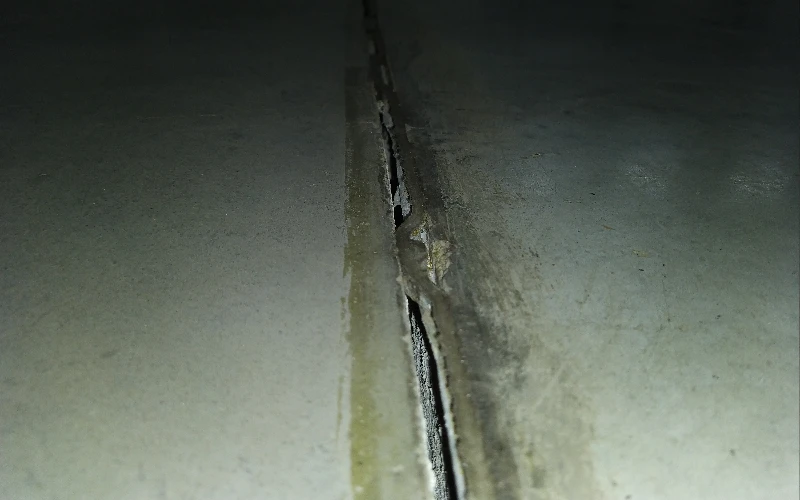
Sealant peeling in concrete floor joints
Why is it not recommended to fill the joints in concrete floors in the first 7 days?
Presence of moisture in the concrete - even if you use a polyurethane primer for joints, the adhesion of the sealant will be poor. Polyurethane sealant applied to a dry substrate.
The concrete slab, within 28 days, continues to gain strength and the seams may diverge. After a month, they may not be 5 mm, but 10-15 mm wide.
If the sealant is filled early, it will not be able to stretch by 200-300%, since its performance is 25% movement of the seam.
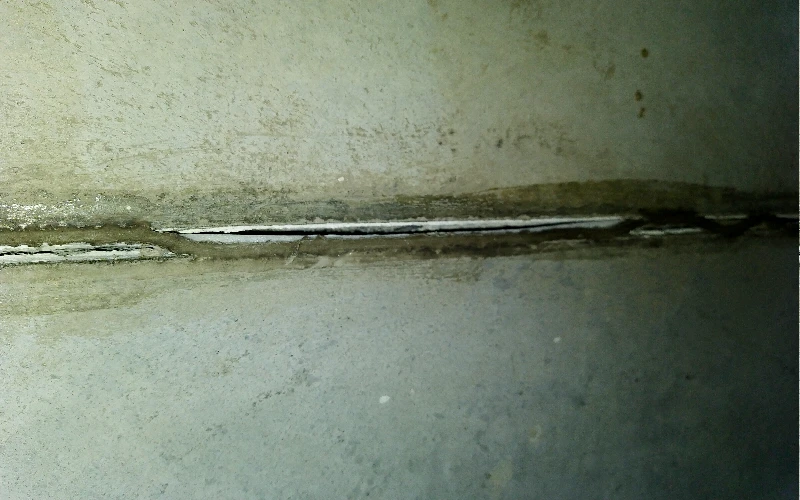
Sealant peeling off at early seam sealing
Sealing expansion joints in industrial floors
Also, in the general design of the building, expansion joints are provided that repeat the entire contour of the room, including the floor.
Sealing expansion joints in concrete floors is a separate type of work that is performed using special profiles or sealants.
On average, the width of the expansion joint is 30-50mm.
Sealing expansion joints in concrete floors
Consider the use of MasterSeal 474 NP polyurethane sealant when sealing joints in concrete.
Stages of sealing an expansion joint in concrete using MasterSeal NP 474
-
Dusting and cleaning the seam.
-
Laying a 6 mm polypropylene bundle to control the flow of sealant and the depth of filling. With a joint width of 5 mm, it is filled with sealant, 5 mm deep. No more and no less, otherwise there will be a crack, in the middle of the seam, in the body of the sealant.
-
Application of polyurethane primer along the edges of the seam, to increase the adhesion of the sealant to the concrete body.
-
After the primer dries, through the gun, the concrete joint is sealed with polyurethane sealant.
- To smooth the seam, use soapy water, a spatula.
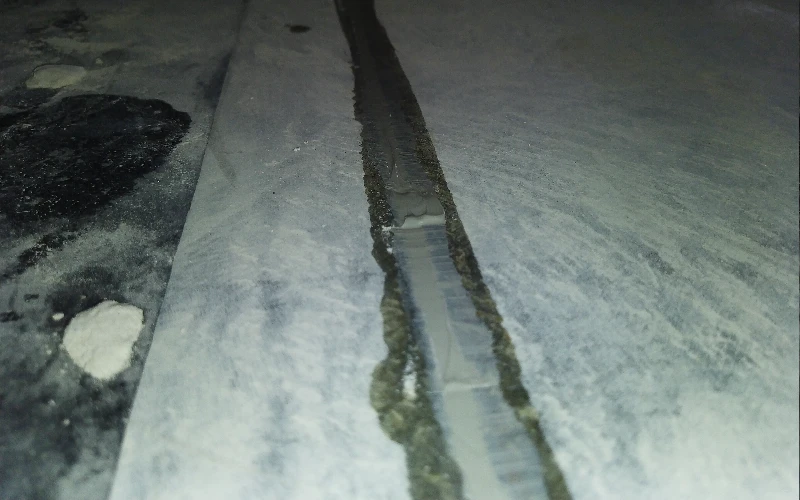
The result of sealing expansion joints with polyurethane sealant MasterSeal NP 474
-
Garbage and moisture do not get into the seams of the concrete floor, therefore, a well-closed seam protects the floor from the effects of an aggressive environment and further destruction.
-
The concrete floor looks aesthetically pleasing, monolithic and airtight.
- Sealant that works together with concrete during thermal expansion and reduces the destruction of the edges of the seam, under intensive use.
Masterseal 474NP
