

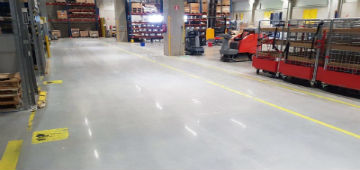


Effective Technologies for the Care and Maintenance of All Types of Floors and Floor Coverings
Introduction
In modern construction and facility management, the care and maintenance of floors and floor coverings are critical to preserving structural integrity, aesthetics, safety, and hygiene.
Industrial, commercial, and residential floors are exposed to various mechanical, chemical, and environmental stresses.
Therefore, adopting advanced technologies and materials for proper maintenance is essential for extending the service life of floor systems and reducing long-term operational costs.
This article outlines the most effective global technologies and materials for cleaning, protecting, and maintaining all types of floor coverings, including concrete, wood, vinyl, epoxy, stone, carpet, and tile.
It is written in a technical tone and optimized for SEO to serve as a reference for construction professionals, facility managers, and flooring specialists.
1. Classification of Floor Coverings and Their Maintenance Needs
1.1 Concrete and Industrial Floors
-
Require dust-proofing, sealing, and periodic cleaning.
-
Subject to heavy mechanical loads, chemical spills, and abrasion.
1.2 Wood and Laminate Floors
-
Sensitive to moisture and temperature changes.
-
Require surface protection, scratch resistance, and regular conditioning.
1.3 Vinyl and Linoleum Floors
-
Resistant to moisture and wear but vulnerable to surface damage.
-
Require periodic stripping, waxing, and anti-static treatments.
1.4 Ceramic and Stone Tiles
-
Durable and moisture-resistant.
-
Require grout maintenance, sealing, and anti-slip treatment.
1.5 Carpet and Textile Floor Coverings
-
Require deep cleaning, stain protection, and odor control.
-
Susceptible to mold and microbial contamination.
2. Floor Cleaning Technologies
2.1 Mechanical Cleaning Equipment
-
Scrubber-Dryers: For large surface areas in commercial and industrial facilities.
-
Vacuum Cleaners with HEPA Filters: For dust-sensitive environments such as hospitals or clean rooms.
-
Rotary Machines: For polishing, buffing, and stripping wax layers.
2.2 Automated Robotic Cleaners
-
Used in smart buildings and public facilities.
-
Equipped with sensors and mapping systems for autonomous cleaning.
2.3 Specialized Cleaning Agents
-
pH-Neutral Cleaners: Safe for delicate surfaces.
-
Alkaline Degreasers: For removing oil and heavy industrial residues.
-
Acidic Cleaners: For descaling and mineral removal on stone surfaces.
2.4 Steam Cleaning Technologies
-
High-temperature steam is used to sanitize floors without chemicals.
-
Effective for tile, vinyl, and some textiles.
3. Floor Protection and Surface Enhancement
3.1 Sealers and Impregnators
-
Concrete Sealers (Acrylic, Epoxy, Polyurethane): Protect against oil, water, and abrasion.
-
Stone Impregnators: Penetrate deep into natural stone to prevent stains and moisture ingress.
3.2 Coatings and Polishes
-
Polyurethane Coatings: Enhance surface durability and chemical resistance.
-
Floor Waxes and Finishes: Provide gloss and protective layers on vinyl and linoleum.
-
Anti-Slip Coatings: Increase friction coefficient for safety in wet environments.
3.3 Dust-Proofing Hardeners
-
Applied on new or existing concrete floors to reduce surface dust and improve durability.
4. Periodic Maintenance Procedures
4.1 Concrete Floors
-
Routine vacuuming and wet scrubbing.
-
Reapplication of sealers every 12-24 months.
4.2 Wooden Floors
-
Dry sweeping, pH-neutral mopping.
-
Application of wood oil or polyurethane finish every few years.
4.3 Vinyl/Linoleum Floors
-
Regular sweeping and damp mopping.
-
Periodic stripping of old wax and application of fresh coatings.
4.4 Tile Floors
-
Grout cleaning and sealing.
-
Anti-slip treatment if required.
4.5 Carpets and Textile Floors
-
Vacuuming, hot water extraction, and dry powder cleaning.
-
Antimicrobial treatments to prevent mold.
5. Floor Maintenance in Special Environments
5.1 Healthcare Facilities
-
Daily disinfection, use of antimicrobial coatings.
-
Seamless floor materials like vinyl or rubber for hygiene.
5.2 Food Production and Processing Areas
-
Epoxy and polyurethane floors with HACCP-compliant coatings.
-
Non-porous and slip-resistant surfaces.
5.3 Warehouses and Logistics Centers
-
Load-resistant coatings, frequent scrubbing, and anti-dust treatments.
-
Reflective coatings for improved lighting efficiency.
5.4 Office and Commercial Spaces
-
Carpet tile cleaning, odor-neutralizing agents, and aesthetic maintenance.
-
Vinyl floor recoating for appearance retention.
6. Sustainability in Floor Maintenance
6.1 Low-VOC Products
-
Use of environmentally friendly cleaners and coatings with minimal volatile organic compounds.
6.2 Water-Saving Equipment
-
Auto scrubbers and cleaners with water recycling technology.
6.3 Recyclable and Renewable Materials
-
Maintenance of floors made from bamboo, cork, or recycled rubber.
7. Technological Innovations in Floor Maintenance
7.1 IoT-Enabled Floor Monitoring
-
Real-time monitoring of cleanliness levels and foot traffic.
-
Predictive maintenance based on sensor data.
7.2 Nano-Coatings
-
Ultra-thin coatings that provide self-cleaning, antimicrobial, and hydrophobic properties.
7.3 Ultraviolet (UV) Curing Systems
-
Fast curing of protective coatings using UV light.
-
Reduces downtime during maintenance operations.
7.4 Smart Maintenance Management Systems (CMMS)
-
Track cleaning schedules, chemical usage, and performance indicators for large facilities.
Conclusion
Effective care and maintenance of floors and floor coverings are critical for preserving their performance, safety, and appearance.
By selecting appropriate cleaning methods, protective treatments, and scheduling preventive maintenance, building operators can greatly extend floor lifespan and reduce repair costs.
Advanced technologies such as robotic cleaners, nano-coatings, and IoT-based systems further enhance the efficiency and sustainability of floor maintenance across various environments.
Construction and facility management professionals are encouraged to adopt these evolving solutions for optimal floor care outcomes.
