

Glue and grout for tiles
Cement adhesive
Dispersion tile adhesive
Epoxy tile grout
Cement adhesive is a dry adhesive mixture of gray or white color, based on portland cement, selected fraction inert fillers and organic additives.
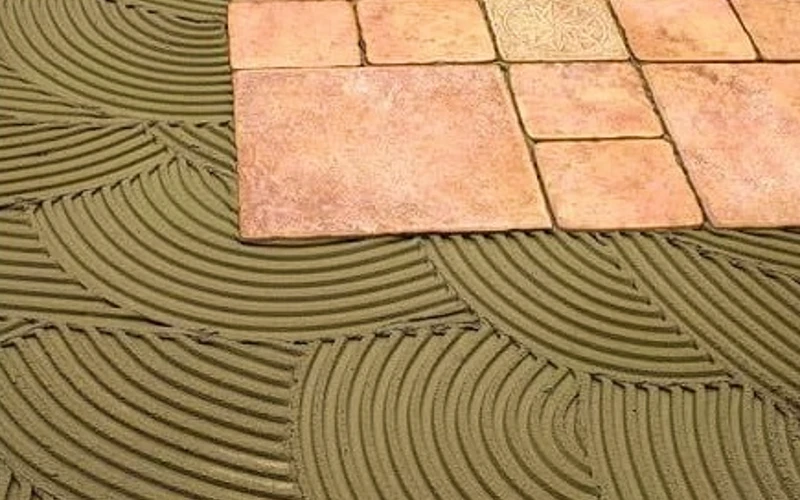
Cement adhesive for tiles
Depending on the operating conditions, cement adhesives are divided into:
-
indoor use;
-
outside the premises (on the street);
-
floor cladding;
- wall cladding;
Bases for cement adhesive
-
Cement strainer;
-
cement plaster;
-
Anhydrite dry screeds;
-
Drywall;
-
Concrete;
- Brick.

Cement adhesive for walls
Scope of application of cement adhesive
-
Swimming pools, bathrooms, showers.
-
Bathrooms, kitchens.
-
Balconies, terraces, facade.
-
Laying tiles on existing ceramic surfaces and underfloor heating.
- Laying tiles on substrates with increased operational or vibration loads, industrial floors.
Physical and mechanical characteristics of cement adhesive
-
Thixotropic (for vertical surfaces).
-
Fluid (for a horizontal plane).
-
Elastic (for the street and dynamic loads).
-
Rigid (for static loads).
-
Fast curing (for fast commissioning of the surface).
-
Frost-resistant (for outdoor use).
-
Waterproof (for damp rooms).
-
Layer thickness: max. 5-15 mm, on average.
- Consumption : max. 5-7 kg/sq.m. average.

Laying floor tiles
Cement adhesive classification according to UNI EN 12004 and UNI EN 12002
-
TYPE: S.
- Class 1 F - S1 - S2 - TE and 2 F - S1 - S2 - T E.
DESCRIPTION
-
C1 - ordinary cement glue.
-
C2 - cement glue improved.
-
F - fast setting adhesive (adhesion ≥ 0.5 N/mm2 after at least 6 hours).
-
S1 - elastic adhesive (only cement) (2.5 mm ≤ S1 < 5 mm).
-
S2 - highly elastic adhesive (only cement) (S2 ≥ 5 mm).
-
T - thixotropic adhesive (reduced slip ≤ 0.5 mm).
- E - adhesive with extended open time (≥ 0.5 N/mm2 after at least 30 minutes).

Laying wall tiles
Dispersion adhesive
Typically white, based on an aqueous emulsion of synthetic resins, inert fillers and organic additives.
Advantages of dispersion adhesive
The product is ready to use and does not require additional preparation (pre-mixing).
Scope of dispersion adhesive
-
Designed for interior floor and wall ceramic cladding with small format tiles (up to 25x25 cm).
- It is also used for internal lining of walls, floors and ceilings with polystyrene panels, glass wool, mineral wool, sound-absorbing and polyurethane foam panels, on absorbent substrates.
Bases for dispersion adhesive
-
Cement screeds and plasters.
-
Concrete, precast concrete.
-
Plaster based on gypsum.
-
Floor or wall coverings from old tiles.
-
Panels made of plywood type STVN and STVKh.
-
Gypsum plaster.
- Walls with pre-existing painted surfaces.

Dispersion adhesive
Physical and mechanical characteristics of dispersion adhesive
-
Thixotropic (zero vertical slip).
-
Elastic (for dynamic loads, temperature changes).
-
Moisture resistant (for wet rooms).
-
With extended open time (laying roll flooring).
- Consumption: up to 4 kg/sq.m.
Classification of cementitious adhesives according to UNI EN 12004 and UNI EN 12002
-
TYPE: D.
- Class: 1 - 2 - E - E.
D1 : regular dispersion adhesive.
D2: improved dispersion adhesive.
T: thixotropic adhesive (reduced slip ≤ 0.5 mm).
E: adhesive with extended open time (≥ 0.5 N/mm2 after at least 30 minutes).
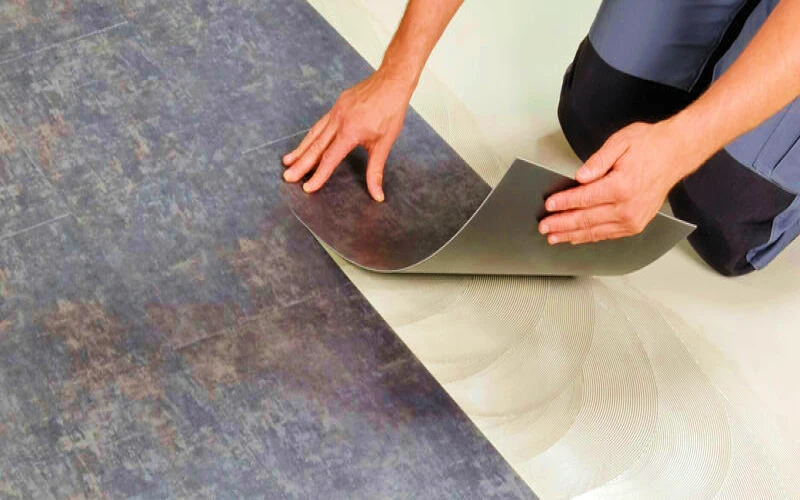
Dispersion adhesive for flooring
Reactive glue
Reactive, epoxy-polyurethane adhesive and other types of chemical compounds.
Description
-
Reactive, two-component adhesive. Component A is a white paste composition consisting of epoxy-polyurethane resins, inert fillers and organic additives. Packed in a plastic bucket.
- Component B is a catalyst of organic origin with the addition of fibers. Packed in a package that is enclosed in a jar with component A.
Physical and mechanical characteristics of reactive adhesive
-
High elasticity.
-
Water tightness and frost resistance.
-
High adhesion to the bases.
-
Deformation resistance.
-
Not subject to cracking.
-
Does not stain ceramic tiles or porous stone tiles.
- Prevents the occurrence of deformations in tiles made of unstable stone or agglomerates, does not shrink when dried.

Reactive Tile Adhesive
Scope of Reactive Adhesive
-
Designed for indoor and outdoor use.
-
For floor and wall surfaces.
-
Partially performs the function of waterproofing.
-
Cladding, on elastic and vibrating surfaces, as well as in rooms with a high level of humidity, in civil and industrial construction.
- It is used for cladding with any kind of ceramic tiles, porcelain stoneware, mosaics made of various materials (glass, metal, stone, wood, combined) and natural stone, including those unstable to moisture, such as: green marble, Serena stone, slate.
Recommended Bases for Reactive Adhesives
-
Concrete, aerated concrete, brick walls and partitions.
-
Cement and anhydrite screeds, cement or cement-sand plasters, heated cement screeds.
-
Gypsum board, gypsum board, gypsum panels, gypsum plaster.
-
Floor or wall coverings from old tiles.
-
Surfaces treated with waterproofing.
-
Metal, chipboard, plywood, PVC, wood, rubber, linoleum.
- Consumption: up to 5 kg/sq.m.
Reactive adhesive classification according to UNI EN 12004 and UNI EN 12002
-
TYPE: R.
-
Class: 1 - 2 - T.
-
R1: regular reactive adhesive.
-
R2: improved reactive glue.
- T: thixotropic adhesive (reduced slip ≤ 0.5 mm).

Reactive tile adhesive for OSB
Grouts for tiles
Cement grout for tiles
Cement grout based on hydraulic binders, fine inert fillers, polymers, organic additives and pigments. Are issued in different flowers.
Application of cement grout for ceramic tiles
-
In seams from 0-15 mm.
-
Inside and outside the premises.
-
On vertical and horizontal surfaces.
- With natural stone, clinker and porcelain stoneware.
Physical and mechanical characteristics of cement-based grout
-
High adhesion to tile edges.
-
High mechanical strength.
-
High resistance to abrasion loads.
- Fade resistant.

Cement grout tiles
Classification of cement grouts for joints according to UNI EN 13888
-
TYPE: CG.
-
Grade: 1 - 2 - W - A.
-
CG1: ordinary cement grout.
-
CG2: improved cement grout.
-
W: reduced water absorption.
- A: high abrasion resistance.
Latex Acrylic Additive for Cement Grout
To increase the physical and mechanical characteristics, special additives are added to the grout, based on water-dispersed synthetic latex.
The addition of a latex additive contributes to:
-
increase the adhesion of the grout to the edges of the tile;
-
increases the elasticity and resistance to abrasion of the grout in the joints;
-
reduces water permeability and contamination of the grout in the joints;
-
increases the frost resistance of the grout;
- does not change the color of the grout.
And expanding the possibilities of areas for application:
-
in bathrooms, showers, pools;
-
on bases subject to deformation loads, heated floors;
-
facades, terraces, balconies;
- in production halls, industrial floors, freezers.
Cement grout for tiles
Epoxy tile grout
-
Two-component acid-resistant composition. Component A is a pasty composition of a mixture of epoxy resins, silicon fillers and additives. Packed in a plastic bucket.
- Component B is a catalyst of organic origin. Packed in a package that is enclosed in a jar with component A.
Advantages of epoxy grout
-
Completely waterproof, does not get dirty and does not let water through.
-
Complete absence of cracks after drying.
-
Resistant to deformation and abrasion.
-
High mechanical strength and elasticity.
-
Resistant to acids and aggressive chemicals.
-
High adhesion to the bases.
-
Resistant to sudden changes in temperature, frost-resistant.
- Does not emit harmful substances.
Scope of epoxy grout
-
Epoxy grout is designed for grouting joints with a width of 2 to 10 mm.
-
For exterior and interior floor and wall cladding, from any type of ceramic tile.
-
Recommended for surfaces subject to contact with aggressive chemicals, as well as for grouting in pools and tanks with thermal or sea water.
-
Sometimes, it can be used as an acid and alkali resistant adhesive for laying porcelain stoneware and chemically resistant tiles in rooms, in cases where high requirements are placed on the adhesive in terms of resistance to aggressive chemicals.
-
Various additives are added to epoxy grouts.
- For decoration: mother-of-pearl effect, shiny silver and gold chips, various metallic effects. Photoluminescent additive, transparent, antibacterial,
Classification of epoxy grouts according to UNI EN 13888
TYPE RG - reactive grout.
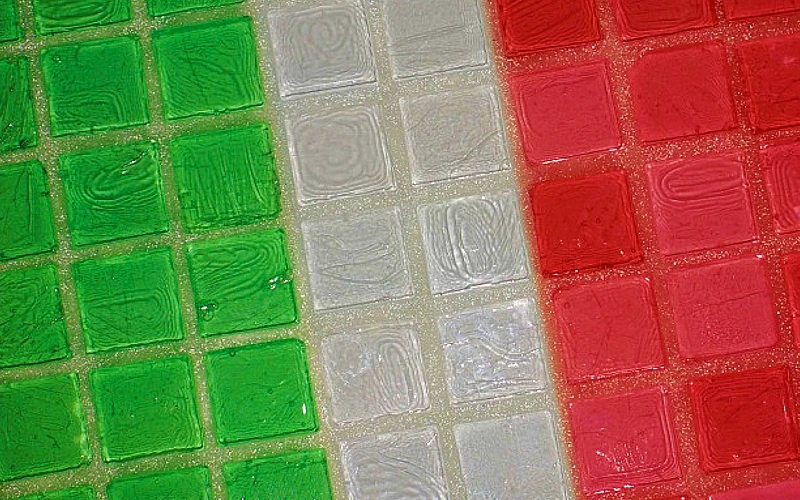
Epoxy grout for mosaics
Polyurethane grout for tiles
An innovative grouting compound based on an aqueous dispersion of polyurethane resins for grouting joints with a width of 1 to 6 mm.
The advantage of polyurethane grout
-
Ready to use.
-
It does not require cooking and does not produce dust, as is the case with cement grouts.
-
The rest of the material can be stored. The remaining material, at the end of grouting, can be used within 3 months.
-
It is necessary to store the remnants of the material in a closed, original package, at a temperature of +5 to +35 0C.
-
Does not require a product hazard label.
-
Does not contain solvents or irritating and corrosive substances like conventional cement and epoxy products.
-
Does not paint over rubbed surfaces, stable and uniform colors.
-
The product does not contain cement, therefore there is no possibility of efflorescence typical of cement products.
-
The composition of the binder includes an aqueous dispersion of polyurethane resins, which ensure the preservation of the original color under the influence of ultraviolet rays or artificial light sources.
-
Water repellency: special additives included in the product significantly reduce surface water absorption, stain resistance. Due to low surface absorption, it is particularly resistant to stains from oil, wine, vinegar, etc. The product also has good resistance to various aggressive chemicals.
- Elasticity: due to the absence of cement in its composition, the product, after hardening, is highly elastic, which makes it suitable for grouting tiles on surfaces subject to vibration and / or deformation.

Polyurethane grout for tiles
Scope of polyurethane grout
-
It is used for grouting joints with a width of 1 to 6 mm, between all types of ceramic tiles and glass mosaics.
-
Indoors, for walls and floors, outdoors for walls.
-
Suitable for both residential and public spaces.
-
Walls and floors, including heated.
-
Working areas of the kitchen, countertops.
-
Floors and walls in bathrooms and showers.
-
Floors of common parts of a building, such as stairs and landings.
-
Exterior walls.
-
Grouting of cladding on elastic or vibrating substrates such as: metal sheets, wood and lightweight panels.
- Produced in various colors.
Classification of grouts for joints according to UNI EN 13888
TYPE RG - reactive grout.
Recommendations for the use of glue and grout
-
When choosing materials, be sure to study the technical specifications of all materials.
-
Consult with the seller or your tiler.
-
Always waterproof in wet areas or outdoors before laying tiles.
- Tile adhesive is not waterproofing. The grout may come off the tile or crack. Thus, there is a possibility of water getting under the tile, with all the consequences (formation of mold under the tile, a disgruntled neighbor from below, destruction of the bearing capacity of the screed or plaster, followed by peeling of the tile).

Polyurethane grout
