



Effective Global Waterproofing Technologies for All Types of Floors and Floor Coverings
Introduction
Waterproofing plays a crucial role in ensuring the longevity, structural stability, and performance of flooring systems in residential, commercial, and industrial settings.
Whether installed beneath ceramic tile, vinyl, wood, resin-based coatings, or concrete slabs, waterproofing solutions protect flooring assemblies from moisture intrusion, chemical ingress, and structural degradation.
This article presents a comprehensive technical overview of effective global waterproofing technologies for all types of floors and floor coverings, with a focus on high-performance materials, application techniques, and international best practices.
1. Importance of Waterproofing in Flooring Systems
Water damage is among the most common causes of flooring failure.
Moisture from below (rising damp) or above (spills, leaks) can cause delamination, adhesive breakdown, microbial growth, and concrete degradation.
Effective waterproofing systems mitigate these risks by forming an impermeable barrier. Applications include:
-
Industrial floors exposed to chemicals and cleaning processes
-
Residential and commercial bathrooms, kitchens, and basements
-
Parking garages, terraces, and balconies
-
Cold rooms and wet process areas in the food industry
2. Types of Waterproofing Technologies by Application
2.1 Cementitious Waterproofing
This widely used method involves applying a cement-based coating that bonds well to concrete substrates.
It is ideal for wet interior areas such as bathrooms and basements.
-
Common materials: Polymer-modified cement mortars, crystalline waterproofing powders
-
Advantages: Easy application, cost-effective, good substrate adhesion
-
Global brands: Mapei, BASF MasterSeal, Sika
2.2 Bituminous Membrane Waterproofing
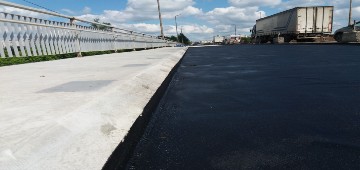
Bitumen-based sheet or liquid-applied membranes are widely used for waterproofing substructures and below-grade slabs.
-
Application: Hot or cold-applied, often reinforced with fiberglass
-
Benefits: High resistance to hydrostatic pressure, durable and flexible
-
Typical uses: Podium decks, foundations, below-ground floors
2.3 Polyurethane Liquid Membranes
These elastic, seamless coatings are commonly used in exposed or trafficable floor applications.
-
Performance: Excellent flexibility, UV resistance, chemical resistance
-
Applications: Roof decks, balconies, wet rooms, service floors
-
Global products: Sikalastic, Tremco, Fosroc Nitoproof
2.4 Polyurea and Hybrid Coatings
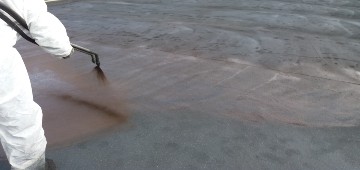
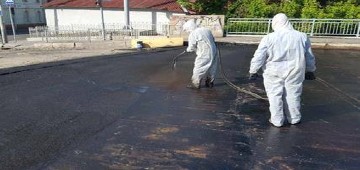
Fast-curing, high-performance elastomers applied using two-component spray systems.
-
Advantages: Rapid curing (seconds), chemical and abrasion resistance
-
Best for: Industrial facilities, heavy-duty floor zones, chemical containment areas
2.5 EPDM and TPO Sheets
Synthetic rubber and polyolefin sheets provide waterproofing for large-scale commercial and green roof installations.
-
Key properties: UV stability, weldable seams, flexibility in cold weather
-
Usage: Roof terraces, plaza decks, and inverted flooring systems
3. Integrated Waterproofing Approaches
3.1 Integral Waterproofing Additives
These admixtures are added directly into concrete to reduce permeability and enhance water repellence.
-
Types: Hydrophobic pore blockers, crystalline growth agents
-
Application: Industrial floors, basements, water-retaining structures
-
Global leaders: Penetron, Kryton, Xypex
3.2 Waterproofing Sheet Membranes Under Tile
For tiling installations in wet rooms or balconies, decoupling sheet membranes provide waterproofing while accommodating substrate movement.
-
Characteristics: Vapor control, crack-bridging, alkali resistance
-
Leading products: Schluter-DITRA, Laticrete HYDRO BAN Sheet Membrane
3.3 Vapor Barriers
Used beneath flooring systems on concrete slabs to prevent moisture vapor transmission from the ground.
-
Materials: Polyethylene sheeting, epoxy-based barriers
-
Standards: ASTM E1745, DIN 18195
4. Waterproofing by Flooring Type
4.1 Resin and Epoxy Flooring
Industrial epoxy or polyurethane flooring systems often require waterproof priming or sandwich membranes.
-
Waterproof primers improve adhesion and block residual moisture
-
Optional topcoats add chemical resistance and durability
4.2 Ceramic and Stone Tile Flooring
These coverings require under-tile waterproofing in wet areas:
-
Cementitious membranes for shower bases
-
Liquid rubber membranes around drains and wall junctions
4.3 Vinyl and Linoleum Flooring
Sensitive to subfloor moisture. Self-leveling compounds used under vinyl must be installed over waterproofed concrete.
-
Vapor control epoxy primers are essential
4.4 Wood and Laminate Floors
Wood is especially susceptible to warping from moisture.
-
Application of waterproof membranes and subfloor sealing before installation
5. Best Practices and Application Guidelines
5.1 Surface Preparation
-
Remove laitance, dust, and debris using grinding or shot blasting
-
Substrate moisture content should meet manufacturer’s requirements
5.2 Detailing at Transitions and Joints
-
Use waterproofing tapes and pre-formed corners at wall-to-floor transitions
-
Expansion joints require flexible sealants or dedicated joint profiles
5.3 Layer Thickness and Curing
-
Liquid membranes require uniform film thickness: 1.5 to 2 mm typical
-
Multiple coats with intermediate drying are essential
5.4 Environmental Conditions
-
Application temperature ranges: typically +5°C to +35°C
-
Avoid application during rain or high humidity for some materials
6. Global Innovations in Waterproofing
6.1 Nanotechnology-Based Coatings
-
Use nano-silica particles to create superhydrophobic and self-cleaning surfaces
-
Application: Decorative concrete, tiled facades
6.2 Smart Waterproofing Membranes
-
Include moisture sensors or color-changing indicators
-
Monitor water ingress in real-time for high-tech flooring systems
6.3 Green Waterproofing Solutions
-
Solvent-free, low-VOC membranes aligned with LEED and BREEAM standards
-
Bio-based polyurethanes and recycled membrane substrates
7. Case Studies and Regional Practices
7.1 Europe
-
EN 14891 sets waterproofing standards for tile underlays
-
Preference for mineral-based systems in Germany and Austria
7.2 North America
-
ANSI A118.10 governs waterproof membranes under tile
-
Growth in cold-applied fluid membranes and hybrid coatings
7.3 Asia-Pacific
-
Emphasis on rapid application systems in fast-track construction
-
Increased adoption of integral crystalline admixtures
7.4 Middle East and Africa
-
Waterproofing essential due to high ground water and humidity
-
Preference for bituminous and spray-applied polyurethane membrane
Conclusion
Effective waterproofing for all types of floor and floor covering installations requires the integration of advanced materials, precise application techniques, and alignment with international standards.
As the industry evolves, innovations such as nanotechnology, sensor-integrated membranes, and sustainable chemistry are enhancing the performance and environmental compatibility of waterproofing systems.
Selecting the right system depends on substrate type, usage conditions, flooring material, and regional climate.
Flooring professionals must consider all factors to ensure long-lasting, leak-proof floor installations across residential, commercial, and industrial projects.
